Advisor Atlas
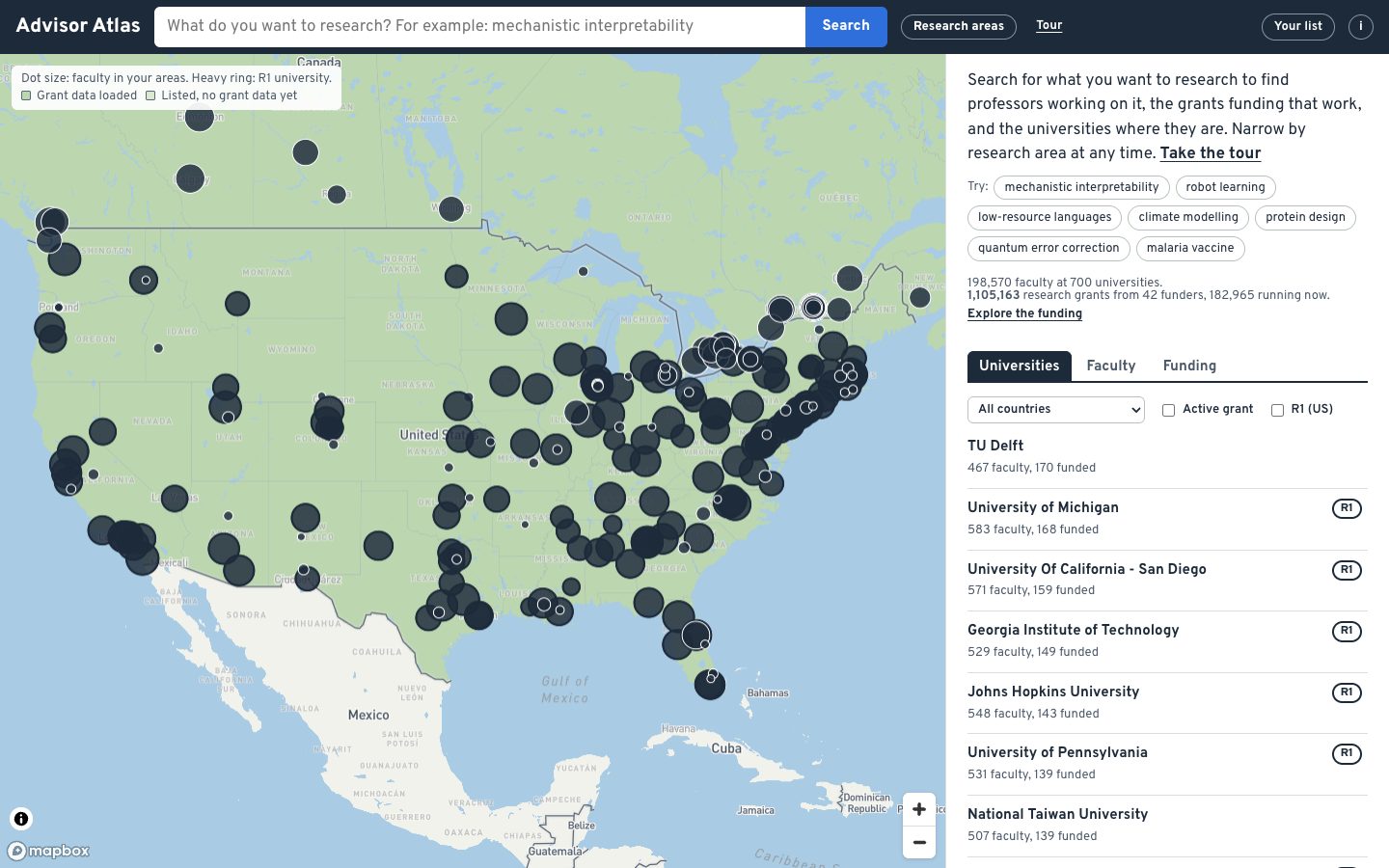
A map for finding a PhD advisor, and a way to pay for the degree. Made first for students in Pakistan applying abroad, who usually do this with spreadsheets and guesswork.
Paused on 20 October 2026. The server is switched off, so advisoratlas.fyi shows a holding page. The screenshots below are the app as it ran.
- Ran
- 11 to 20 October 2026
- Data as of
- 9 October 2026
- Now
- Paused
Why it exists
Finding the right PhD advisor should not depend on who you know.
Many students apply for graduate school with no one to guide them. They don't know which professors work on what they care about. They don't know where the funding is, or which programmes fit their goals. Some students have mentors and contacts who can tell them. Many others have to work it out alone.
Advisor Atlas makes this easier to explore. It brings professors, their research, universities and funding from many countries into one place. It helps students find options they would otherwise miss.
The goal is simple. Students should be able to make informed choices about their studies. They should be able to see where good research is happening and how to take part in it.
Getting into a university is only the first step. What you can learn, add and build there matters just as much.
Advisor Atlas is here to make these opportunities easier to see and easier to reach, so more students can find their way forward.
What a student does with it
1Say what you want to research
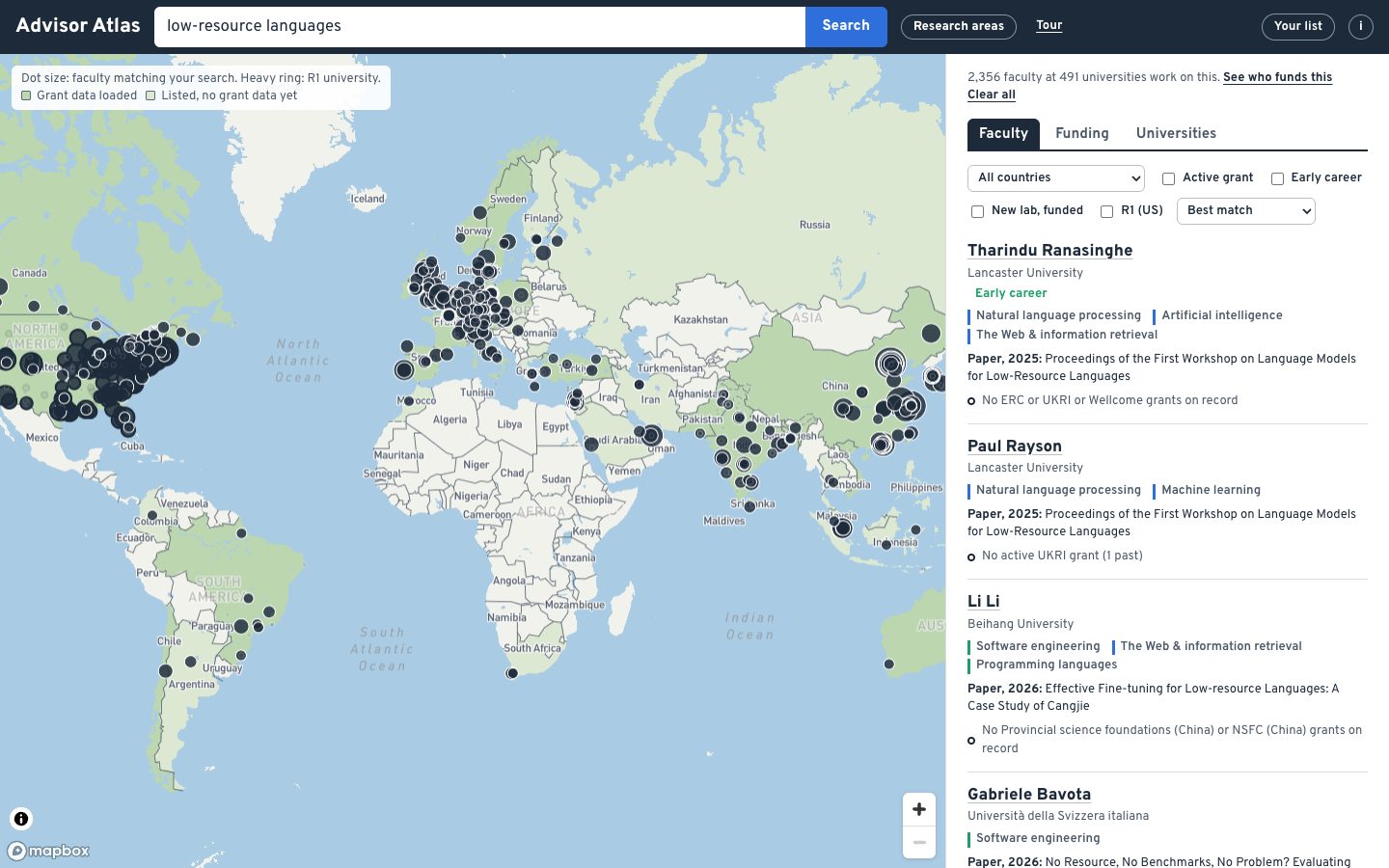
Use your own words. You don't need to know a field's vocabulary, because the search reads meaning. A search for low-resource languages finds 2,356 people at 491 universities. They are ranked by how close their recent work is, and each one shows the paper that matched.
2Read a profile before writing
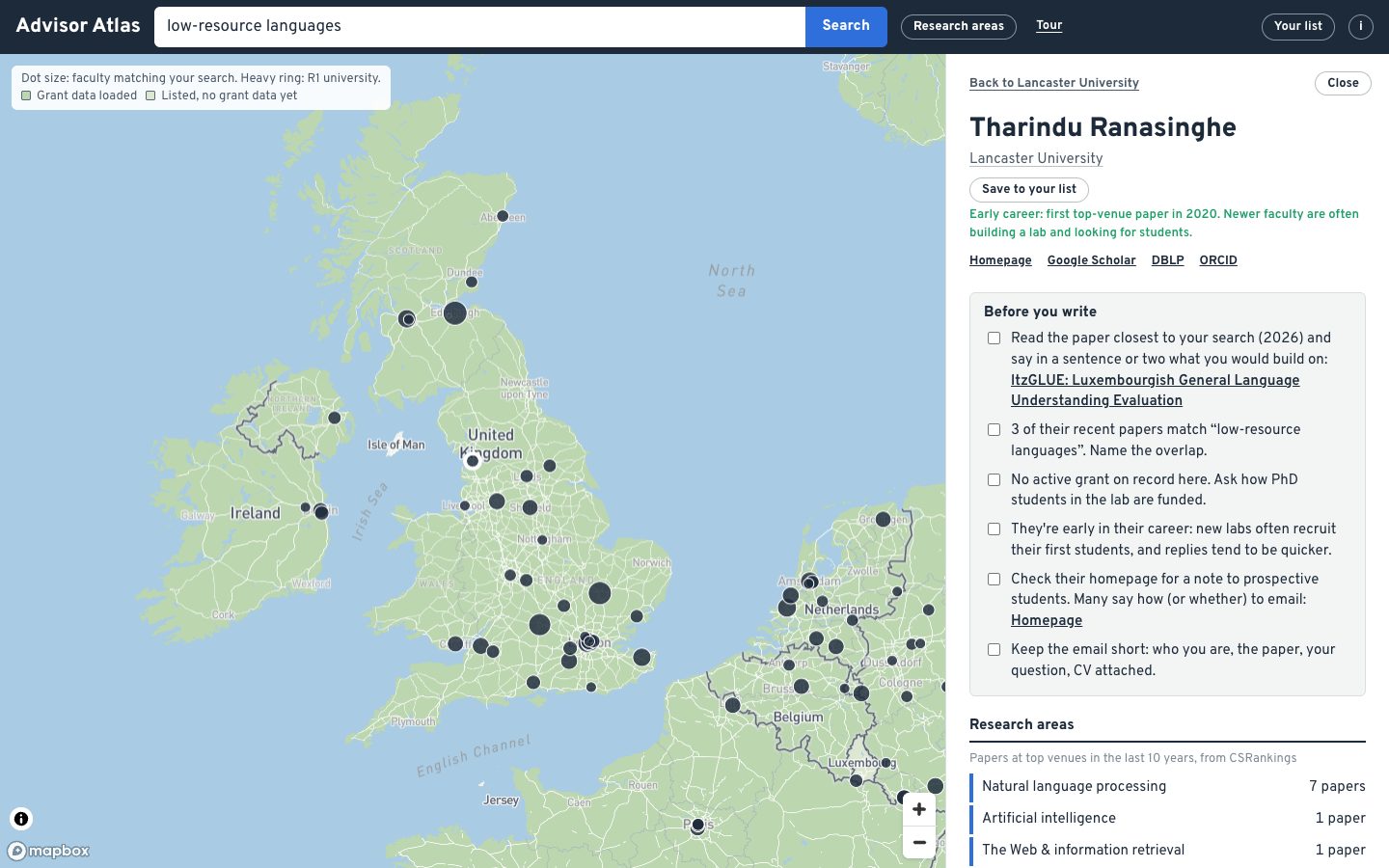
A profile shows their recent papers, the grants they hold and who they work with. It also gives a short checklist for the first email. It points to the paper closest to your search, says whether a grant is running and whether the lab is new, and links to what their homepage says about new students.
3Save the people you like
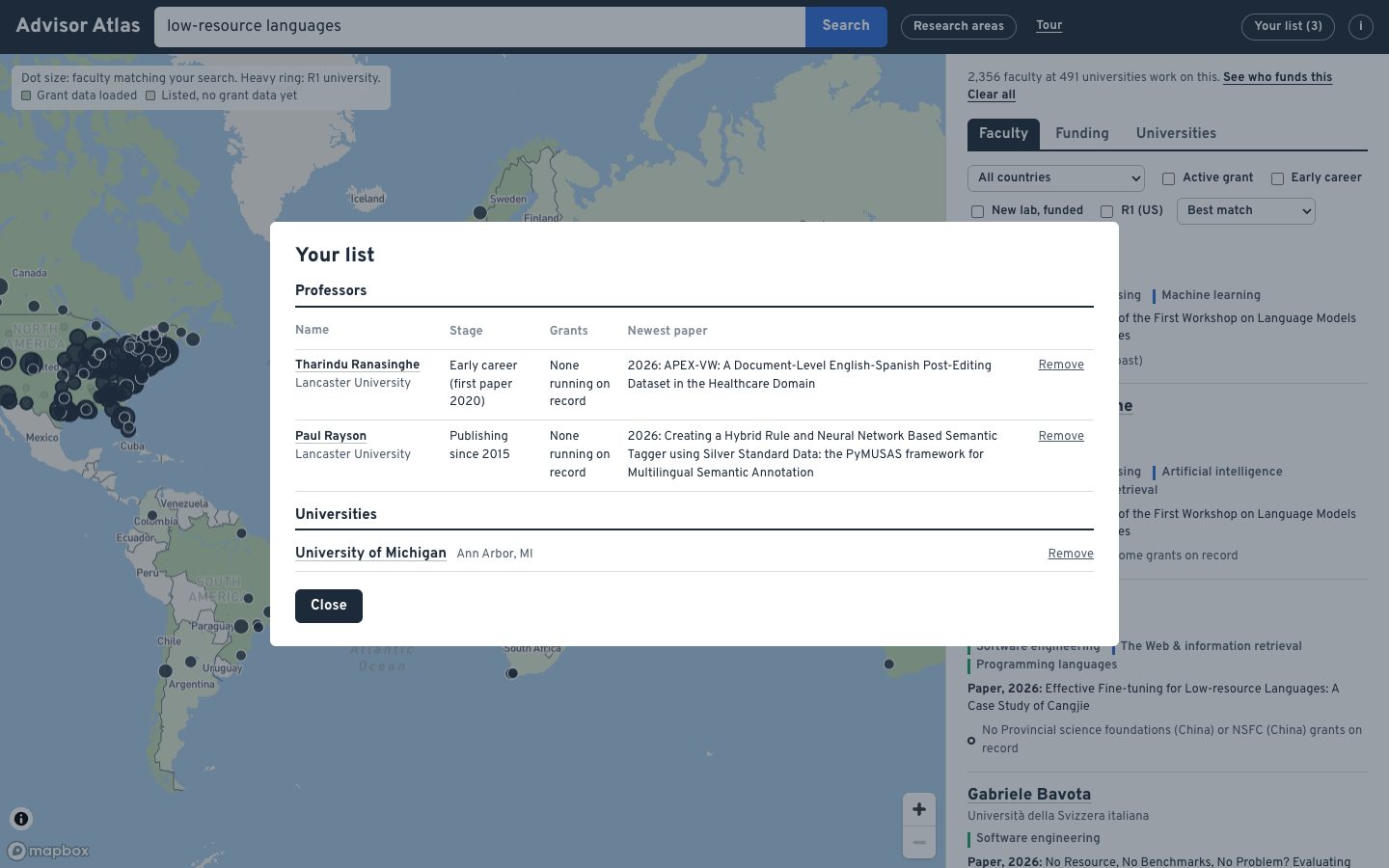
Save professors and universities to your list and compare them side by side. The list shows each person's career stage, whether a grant is running, and their newest paper. It stays in your own browser, so there is no account to make.
4Find the money
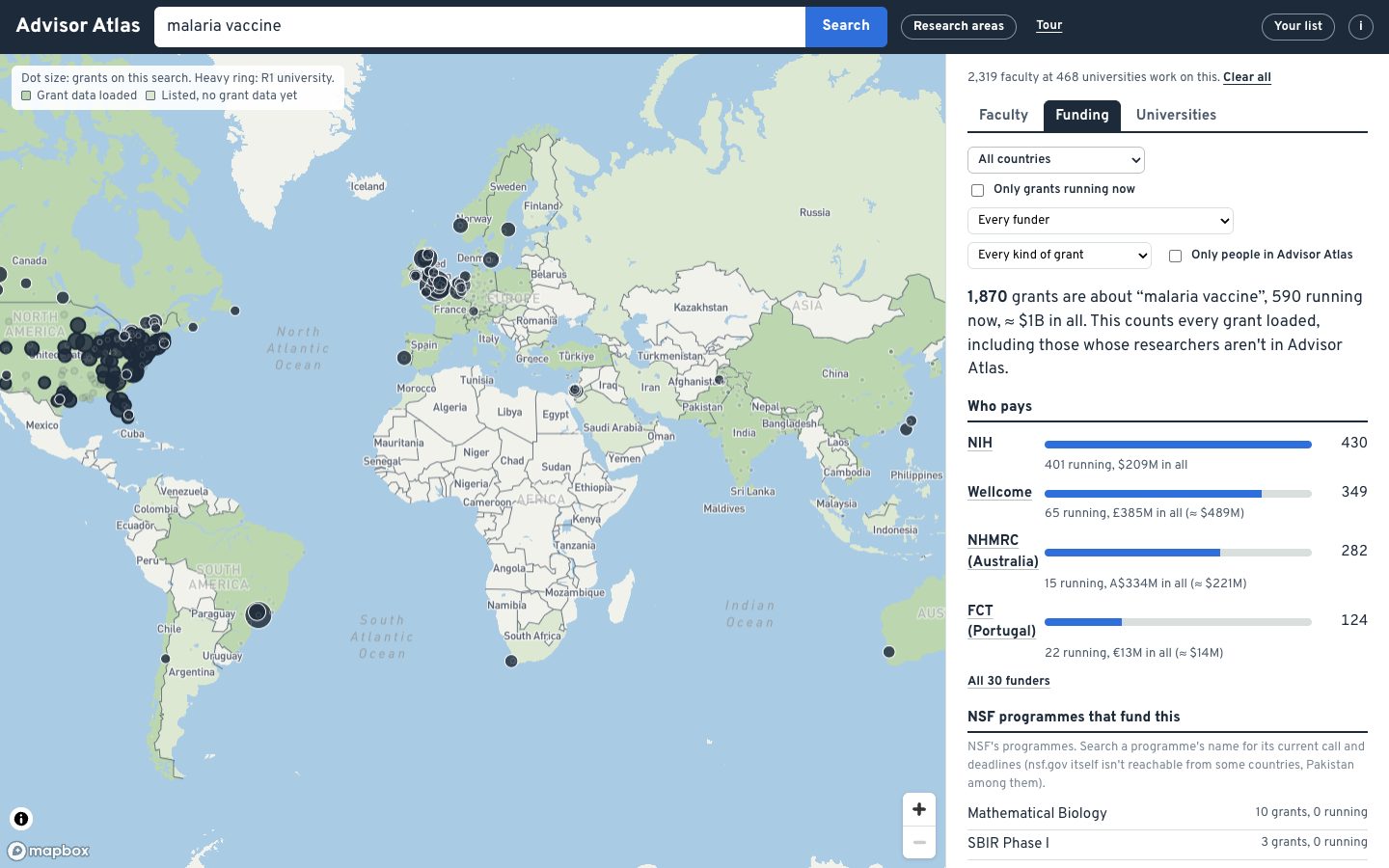
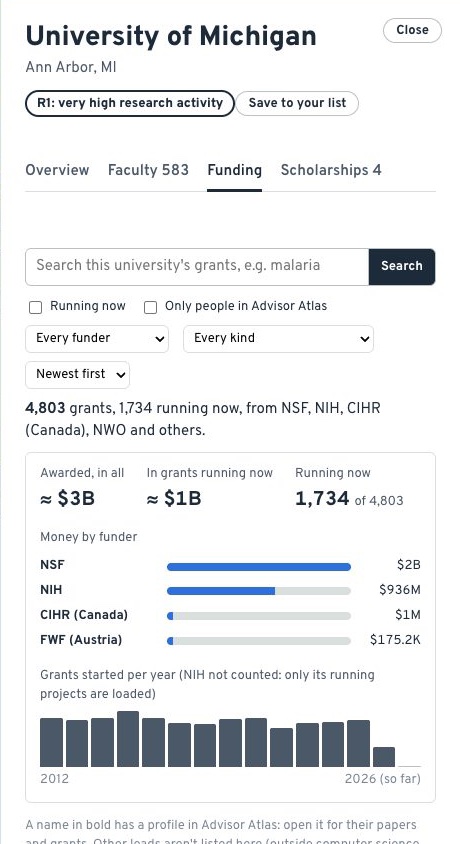
See who pays for your topic. This counts every grant loaded, not only those of people on the map. For malaria vaccine there are 1,870 grants, and 590 of them are running now.
5Spot labs that are just starting
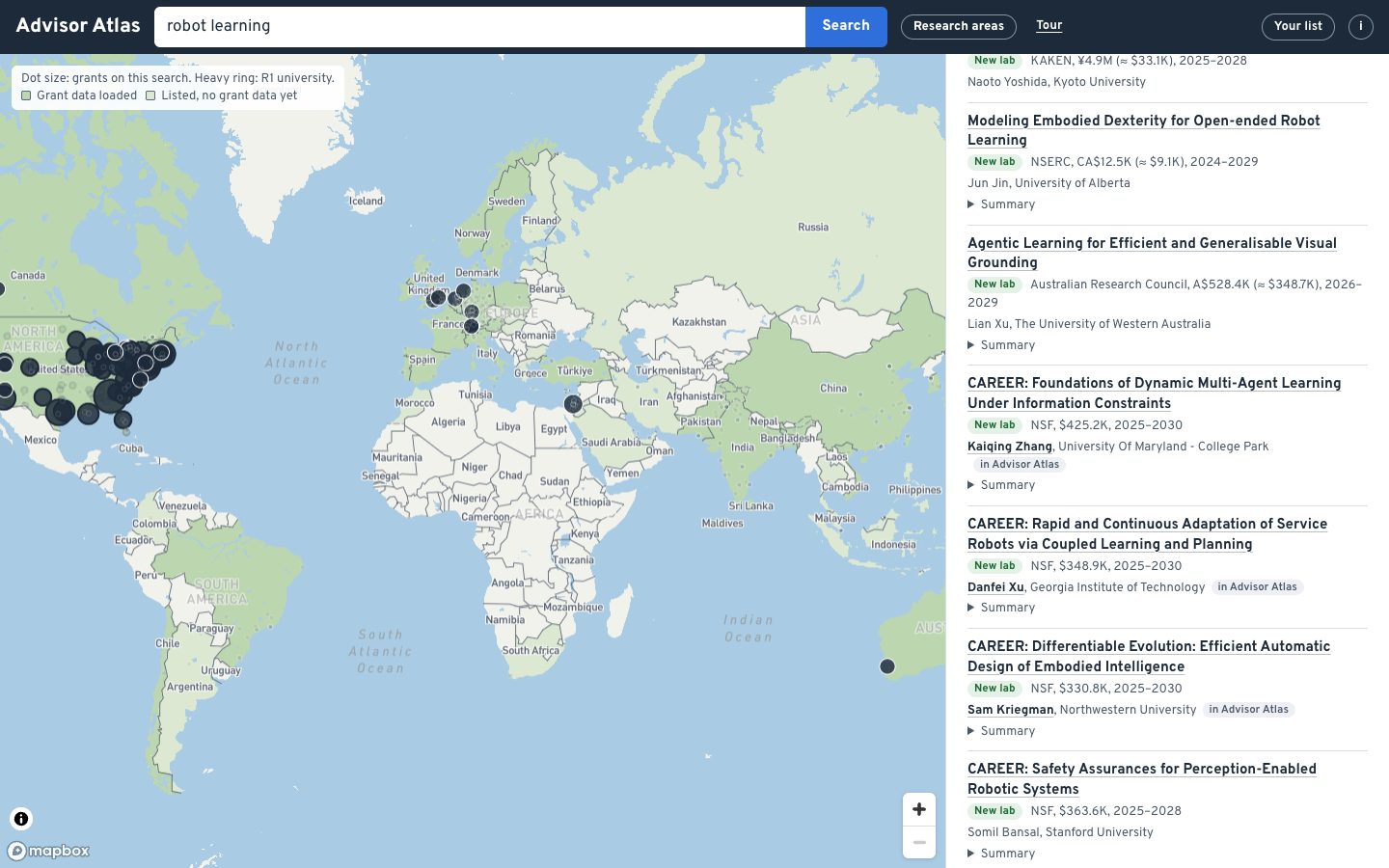
Narrow the funding to new labs. These are grants for people starting their own lab, such as NSF CAREER awards. New labs often look for their first students. For robot learning there are 195 such grants, and 73 of them are running now.
6Read any grant
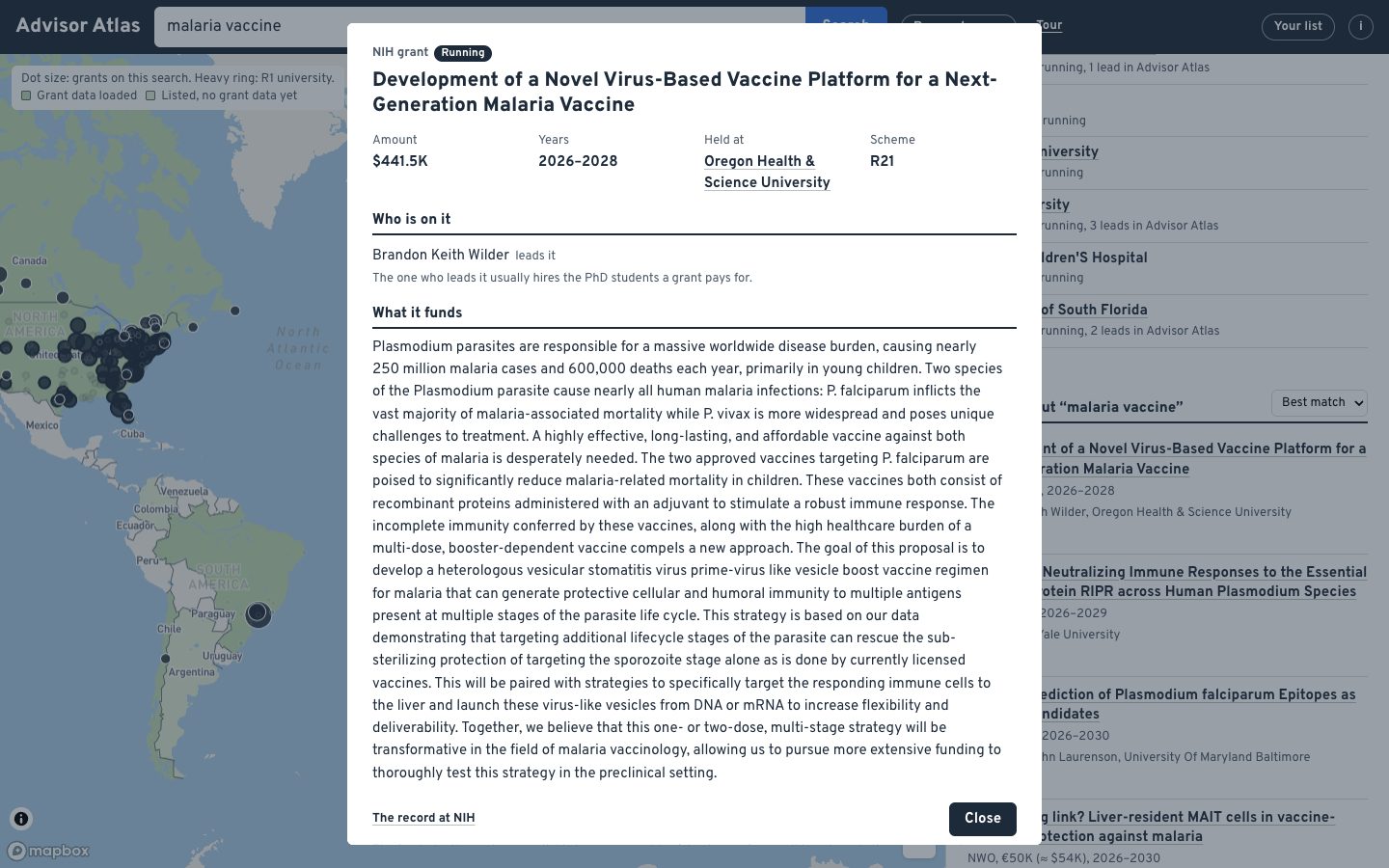
Every grant opens inside Advisor Atlas. It shows what the grant pays for, how much, for how long, and who leads it. The person who leads a grant is usually the one who hires the PhD students it pays for. This also helps where a funder's own website is blocked, as nsf.gov is in Pakistan.
7Look closely at a university
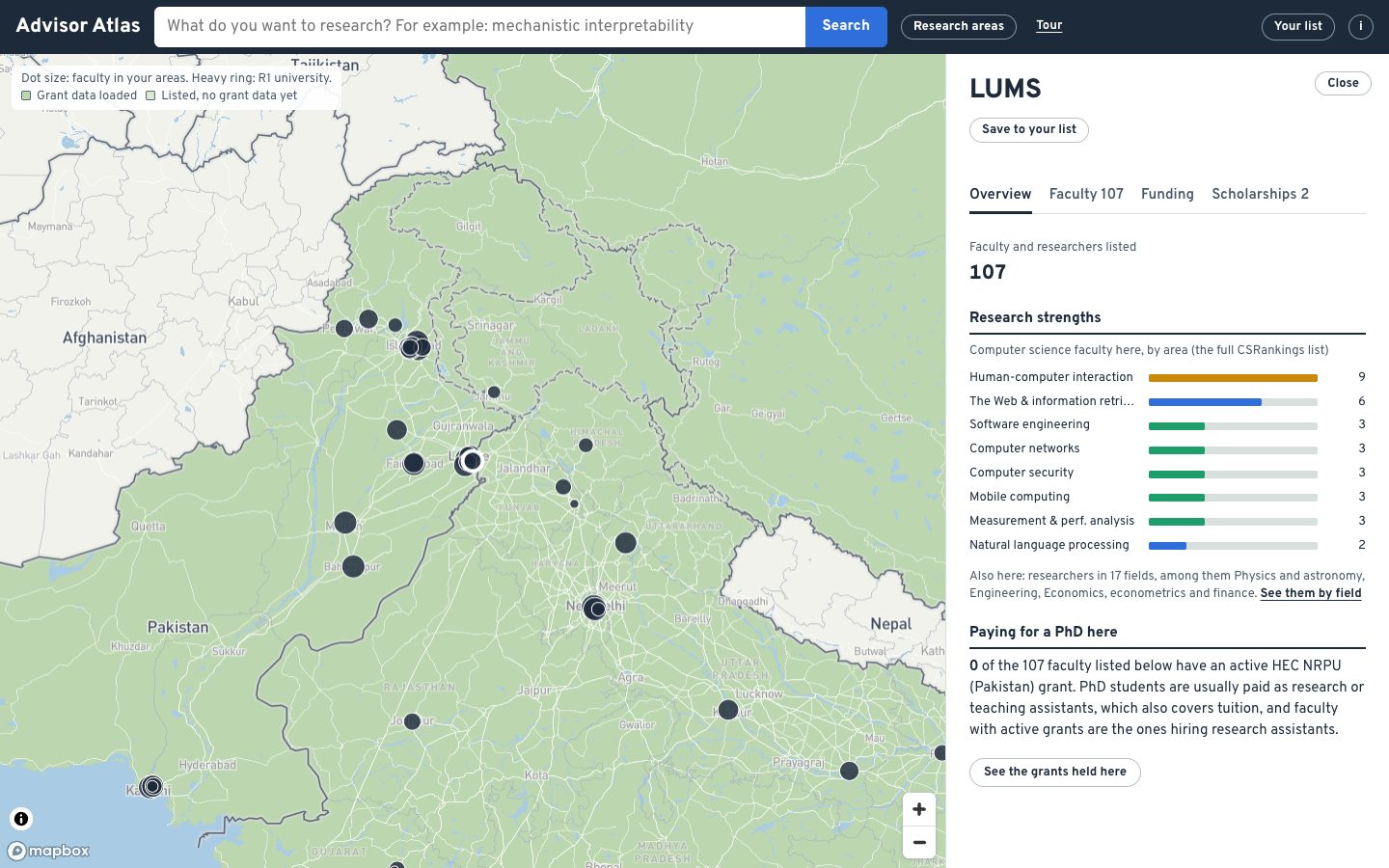
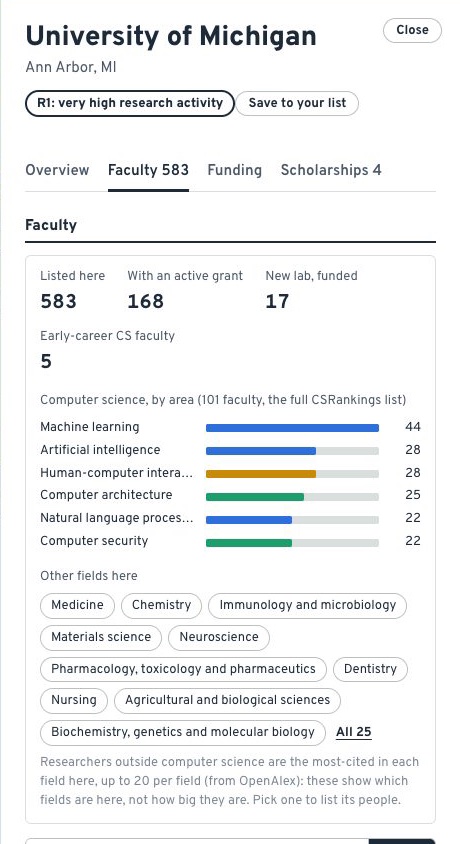
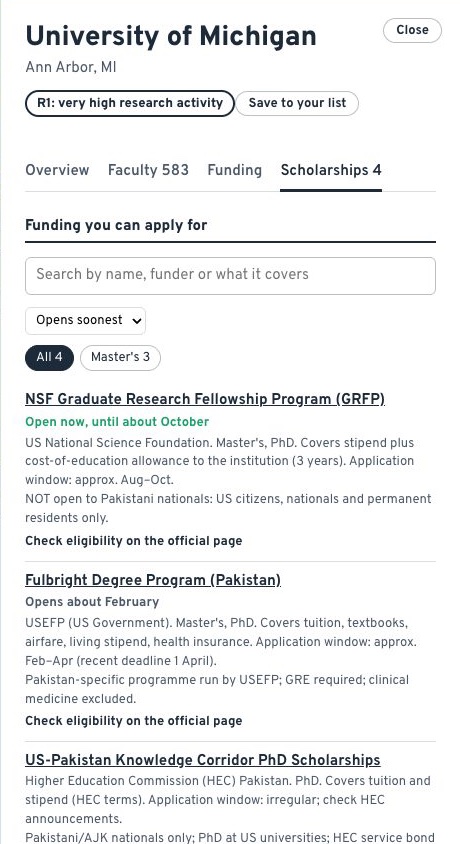
A university page shows its research strengths and who funds its faculty. It lists PhD programmes that pay students directly, the grants held there, and the scholarships you can apply for.
What it holds
- researchers
- 198,570
- universities
- 700
- countries
- 61
- recent papers
- 1.26M
- research grants
- 1.1M
- funders
- 42
- grants running now
- 183,002
- scholarship programmes
- 95
4,708 of the researchers are at 25 universities in Pakistan. Computer science faculty come from CSRankings (18,015); researchers in 25 other fields, from cardiology to economics, from OpenAlex (180,555). Grants come from funders in 29 countries and territories and the European Research Council, from NSF and NIH to HEC Pakistan, NSTC Taiwan and FAPESP Brazil.
Choices that shaped it
- Search by meaning
- A student rarely knows a field's words yet. Describing the work in plain language should be enough to find the people doing it.
- Grants as the hiring signal
- PhD students are usually paid as research or teaching assistants, and the professors with running grants are the ones hiring. Grants meant for new labs (NSF CAREER, ERC Starting, ARC DECRA, NIH R00) mark people recruiting their first students.
- Every grant readable inside the app
- Some funders' sites cannot be reached from Pakistan; nsf.gov is one. So each grant has its own page in Advisor Atlas, with its abstract, amount, dates and team.
- Calm by default
- A sentence first and numbers second, short lists with the rest one click away, and a signal as a single tag a student can act on (New lab, funded) rather than a table.
- Say what is missing
- “No grant on record” is shown as exactly that, and the gaps are stated where they matter, so an absence is not mistaken for a fact.
What it is still missing
- Researchers outside computer science come from OpenAlex and are chosen by citations. They are not a checked list of faculty.
- Germany has no national grant data yet; India's covers medical research only, and Korea's mostly the humanities and social sciences.
- A grant is linked to a person only when the name and the university both match, so some grants show no one even when the researcher is listed.
- Industry and university funding is not included, so “no grant” does not mean “no funding”.
What happens next
It was open to students for ten days, with two questions: did it help you find someone to write to, and was the funding information useful? It is paused for now, with the server switched off. This page stays up as the record of what it was and what it held.
Sources: CSRankings; DBLP (CC0); OpenAlex (CC0), including its awards for national funders (each funder's own terms apply); IPEDS, US Department of Education; NSF Award Search; NIH RePORTER; UKRI Gateway to Research, Open Government Licence v2.0; Australian Research Council; Royal Society Te Apārangi (Marsden Fund); Agence nationale de la recherche, ODbL; Swiss National Science Foundation; CORDIS, European Commission, and the ERC's lists of principal investigators; Japanese grants: created by Advisor Atlas, based on KAKEN (NII); NSERC Awards Data, contains information licensed under the Open Government Licence – Canada; NWOpen API (CC0); FWF Open API (CC0); Research Grants Council of Hong Kong project records (facts only); National Health and Medical Research Council (CC BY 4.0); FRIS, Flemish Government; Narodowe Centrum Nauki; AMED (Japan); Indian Council of Medical Research; Biblioteca Virtual da FAPESP; SweCRIS; Research Portal Denmark; National Research Foundation of Korea via data.go.kr; ISCIII and NSF Sri Lanka (facts and links only); campus locations © OpenStreetMap contributors (ODbL); scholarships from a curated list and the DAAD database. Map © Mapbox.