Built to understand something
37 interactive pages, 11 topics
Pages I made to understand something, each one live below. They are plain HTML, CSS and JavaScript, so they keep working without a build step. Open any of them full to actually use it — the previews are not interactive.
Recently added
Edit Forensics
security/edit-forensics/
A Voice, Paced by Its Clips
projects/brick-stage/out/
Camera Language
projects/brick-stage/out/
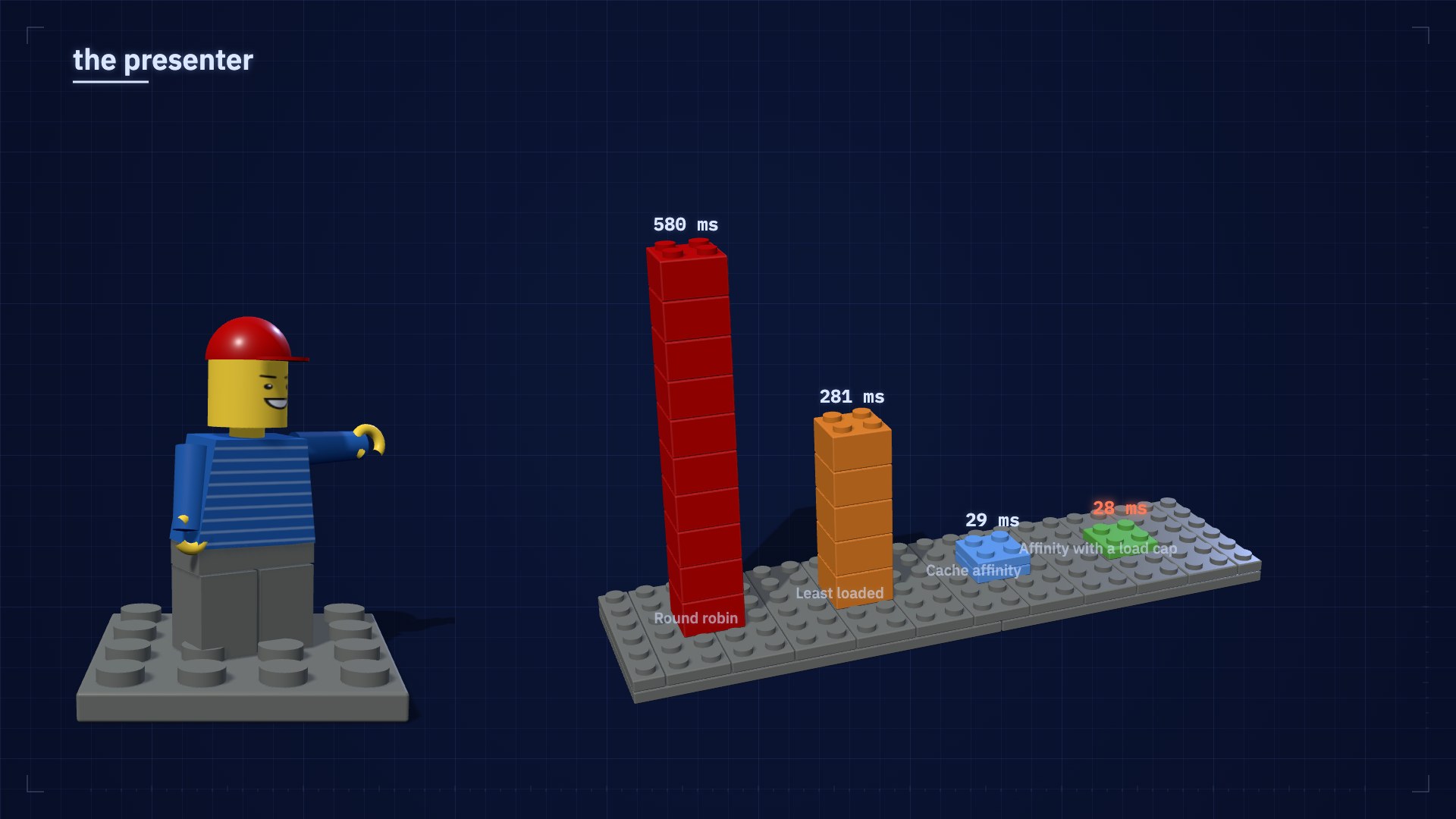
The Presenter
projects/brick-stage/out/
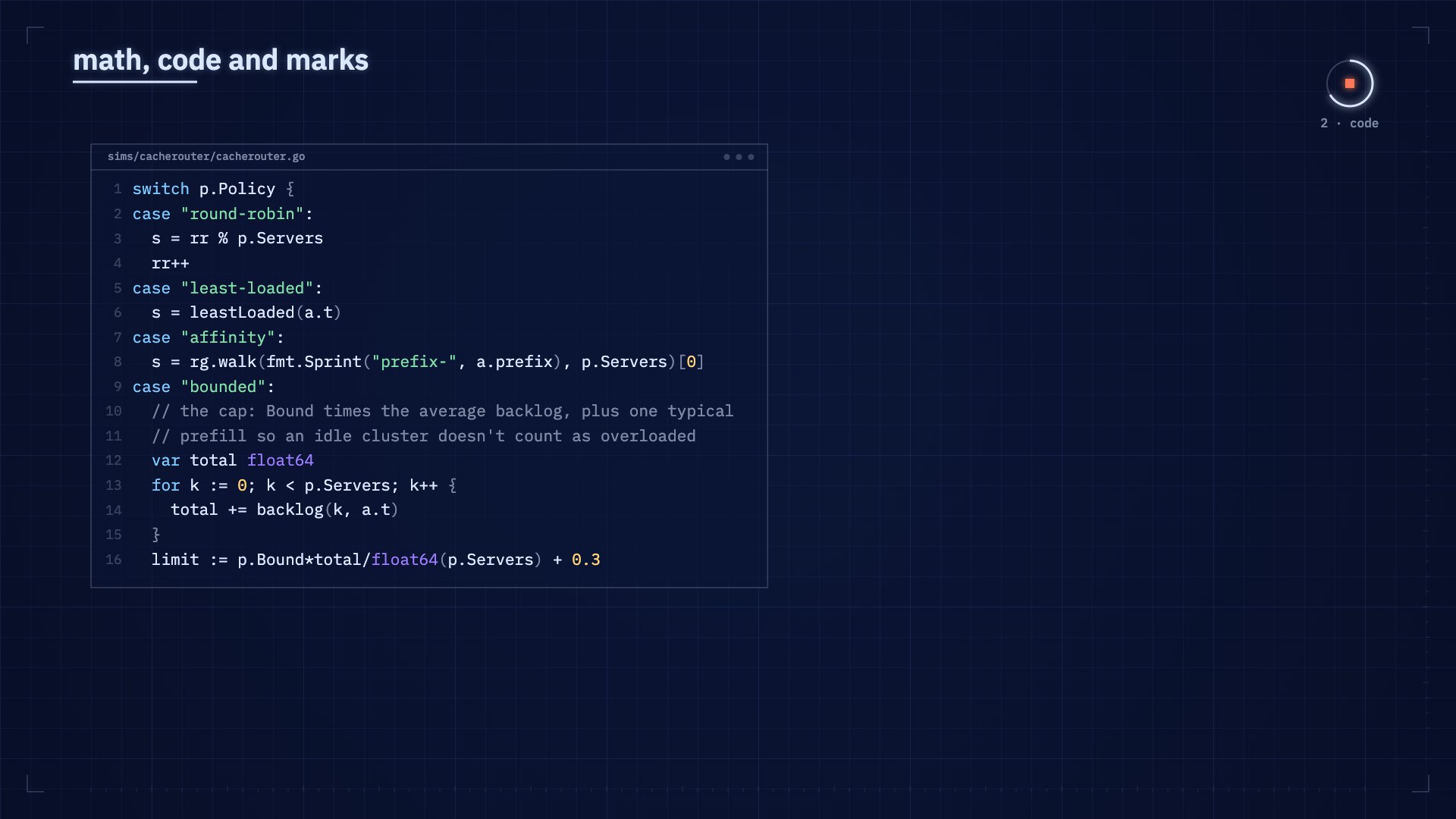
Math, Code and Marks
projects/brick-stage/out/
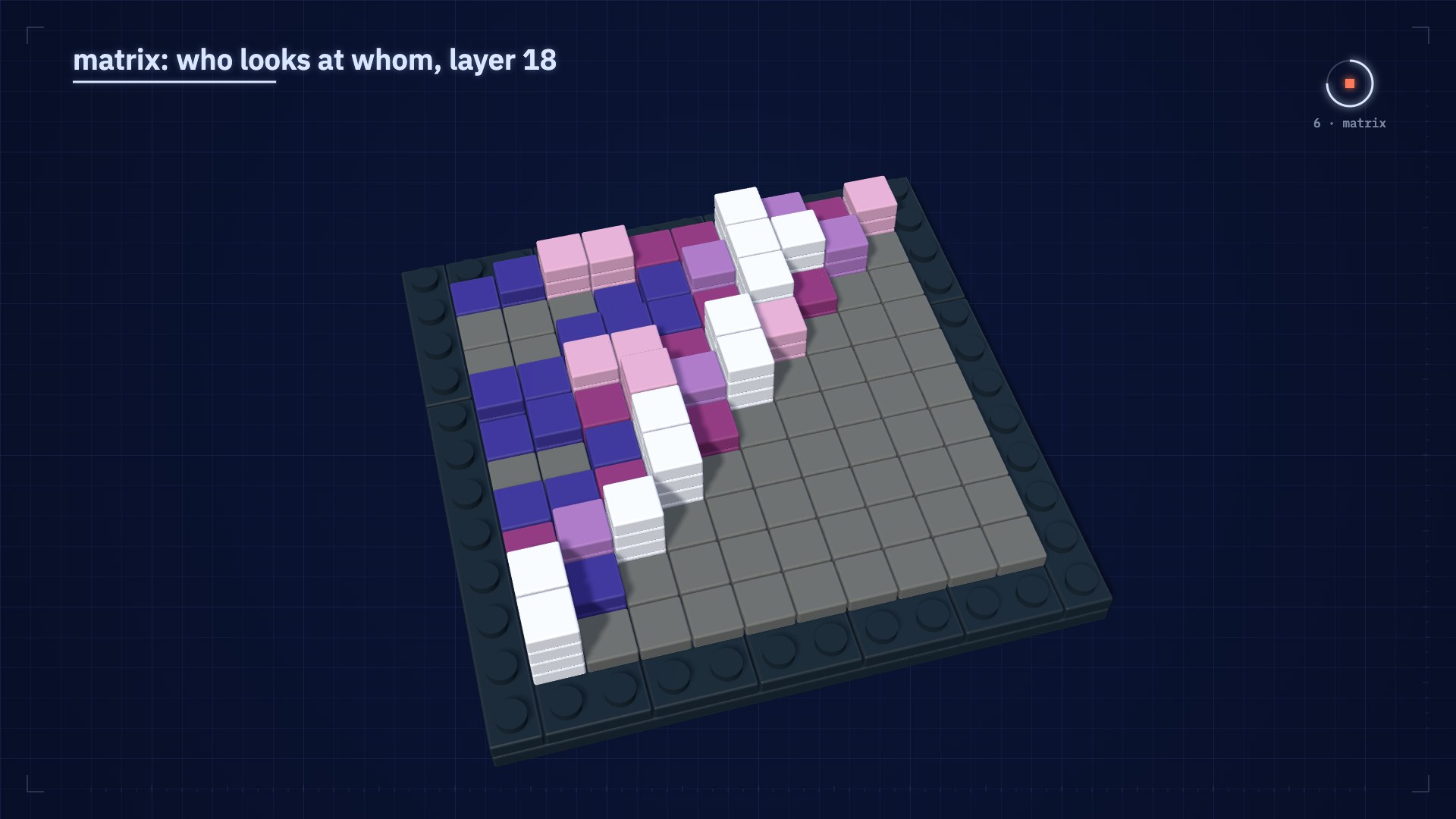
Eight More Brick Charts
projects/brick-stage/out/
Mind 2
The Belief Problem
What it takes to give up a belief, and why removing one is harder than adding one. Walks expansion and contraction over the same belief set.
mind/
The Researcher's Stream
How a line of inquiry actually moves — branching, parking, and coming back — rather than the tidy version that appears in a paper.
mind/
Economics 1
AI 2
Claim Knowledge Graph Explorer
111 papers, 736 typed edges. Nodes are extracted claims rather than papers, so you can ask which claim supported or contradicted which.
ai/responsible-ai/knowledge-graph/
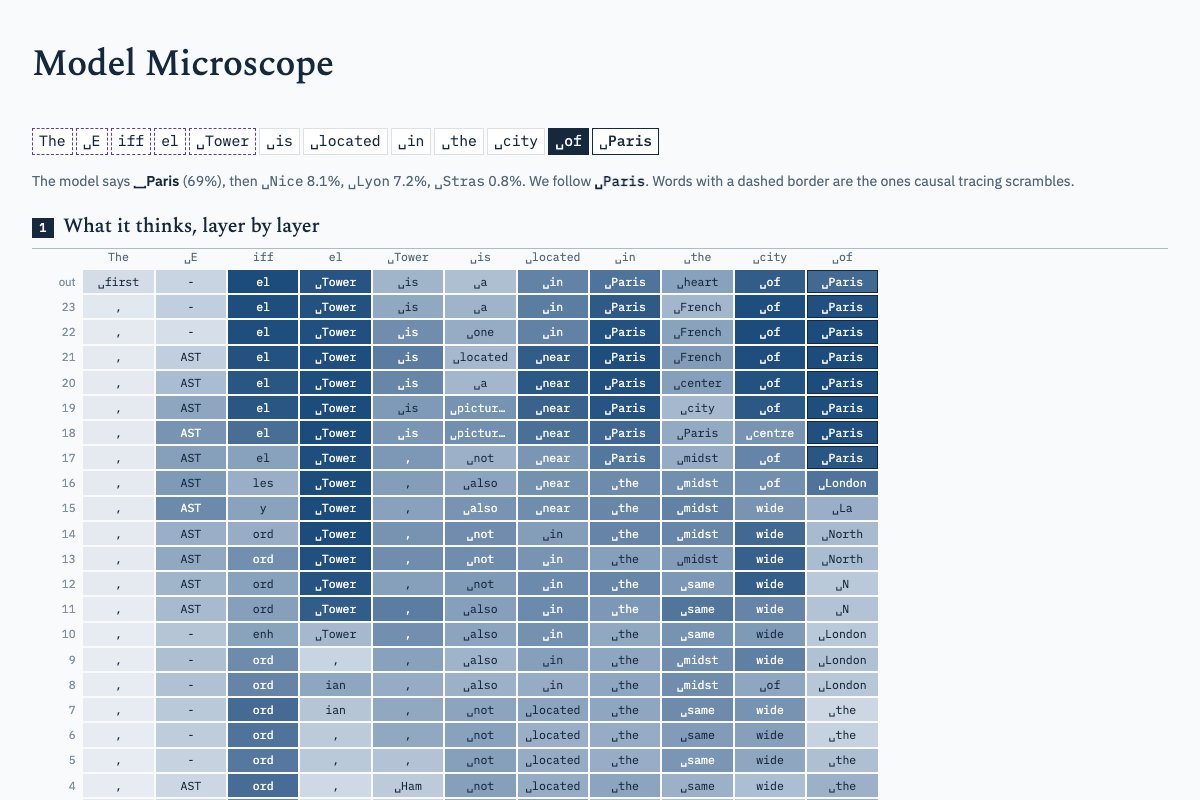
Model Microscope
GPT-2 opened up three ways on eighteen prepared prompts: what it would say if it stopped at each layer, which words it looks back at, and — by causal tracing, the method behind ROME — where a fact is actually stored. Includes the cases where it fails: a negated fact, a sum, and a CEO who changed after its training.
ai/model-microscope/
Security 1
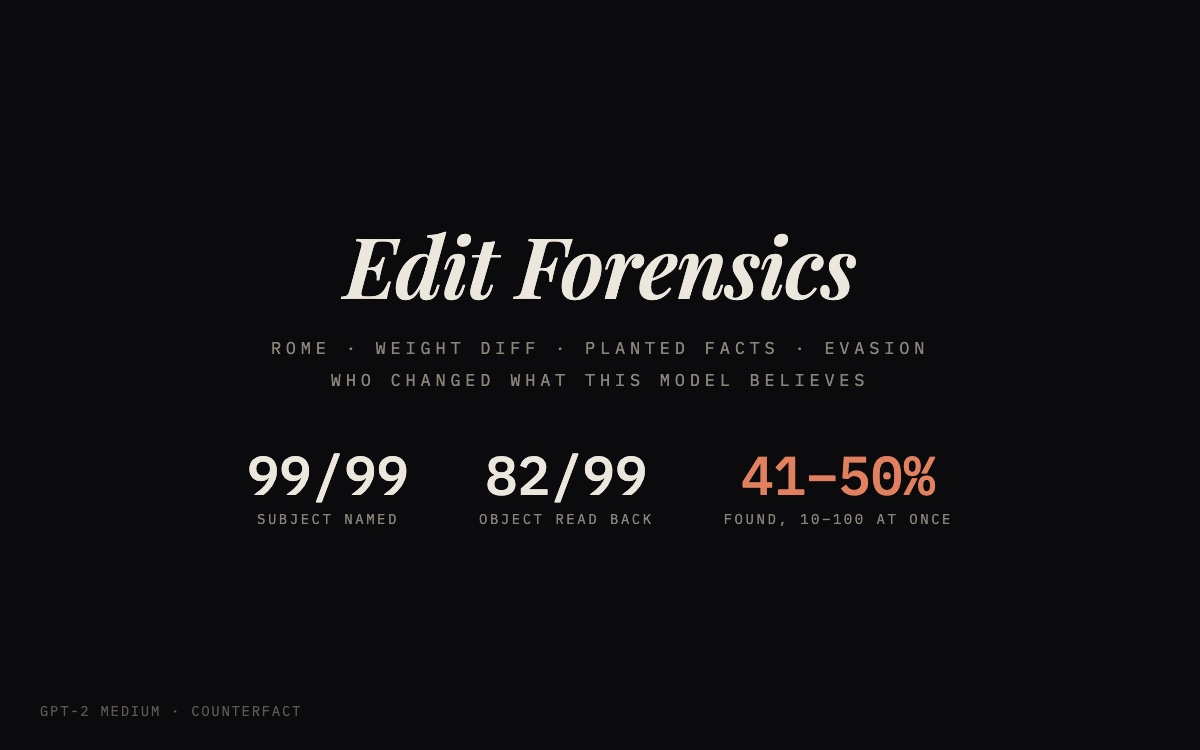
Edit Forensics
Someone plants a false fact in an open model with ROME and republishes it. Given the claimed base, the planted subject ranked first of 20,391 names in 99 of 99 tampered GPT-2 models, and the planted object was read back in 82. Cheap hiding (weight noise, fine-tuning, spreading the edit over five layers) did not stop it; planting many facts at once and adding decoys did. GPT-2 only, with the limits stated.
security/edit-forensics/
Medicine 3
The Pitt, Decoded
Emergency-medicine vocabulary ordered on one ruler — how fast each failure kills — from the airway outward to the department. Six animated panels, an interactive bench for turning a prior and a likelihood ratio into a posterior, and sources that mark what was checked against a paper and what was not.
medicine/
ApoB and the Cardiometabolic Cascade
Why the particle count matters more than the cholesterol number, traced through the cascade it sits in.
medicine/
Spine Cracking — What Actually Happens
The mechanics behind the sound, and which of the common explanations survive contact with the evidence.
medicine/
HPC 2
DataScalar Race
A 1997 bet that arithmetic would become free and moving data would not. Races a traditional machine against DataScalar, where every chip runs the same program and the chip that owns the data broadcasts it, then shows the move cost at which that wasted compute starts saving energy.
hpc/
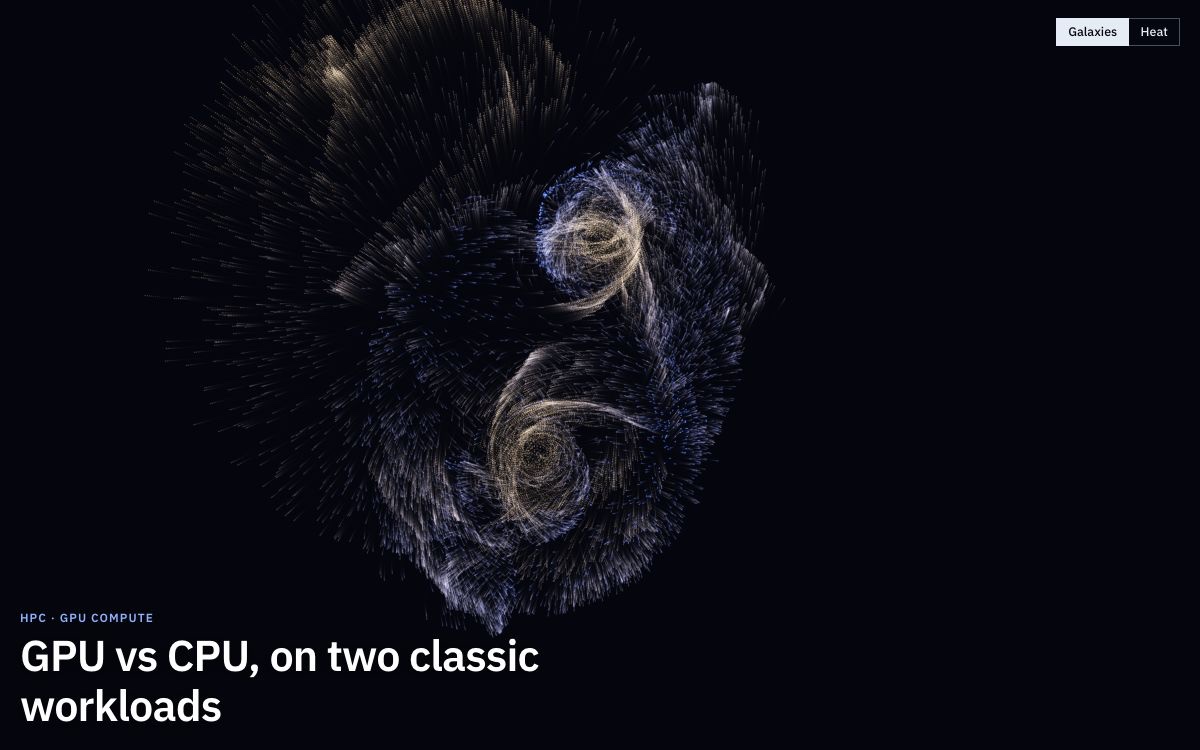
GPU vs CPU, on Two Classic Workloads
Gravity between tens of thousands of bodies and heat spreading across a plate, live on your GPU, with native Metal measurements from an M2 Pro. One workload runs 22× faster on the GPU, the other under 2×: compute-bound versus memory-bound, shown with real numbers, and a video recorded on that GPU for browsers without WebGPU.
hpc/metal-gpu-bench/
Computing history 1
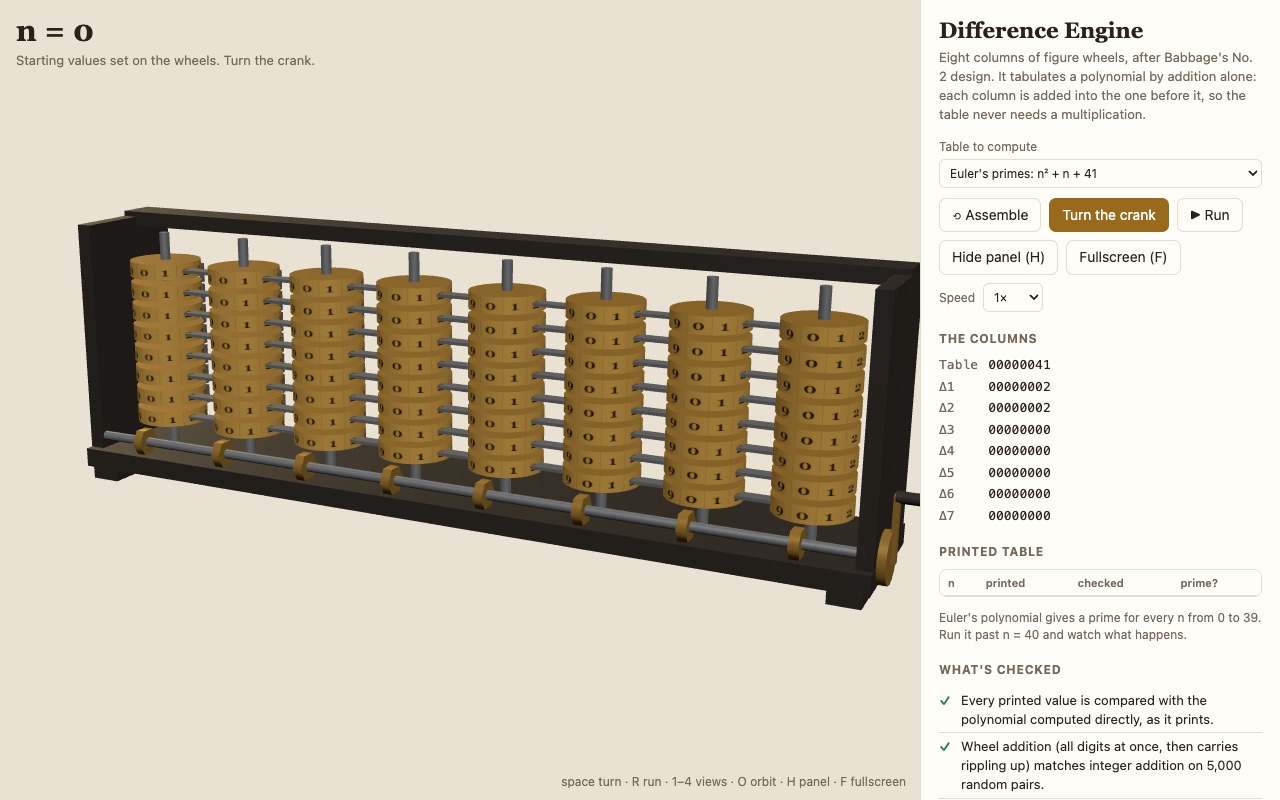
Difference Engine
Babbage's No. 2 design in 3D. Two hundred parts assemble themselves from every direction, then a turn of the crank tabulates a polynomial by addition alone: half the columns add, the carries ripple up, and every printed row is checked against the polynomial itself. Run Euler's n² + n + 41 past n = 40 to see where its primes stop.
projects/
Brick Stage 8
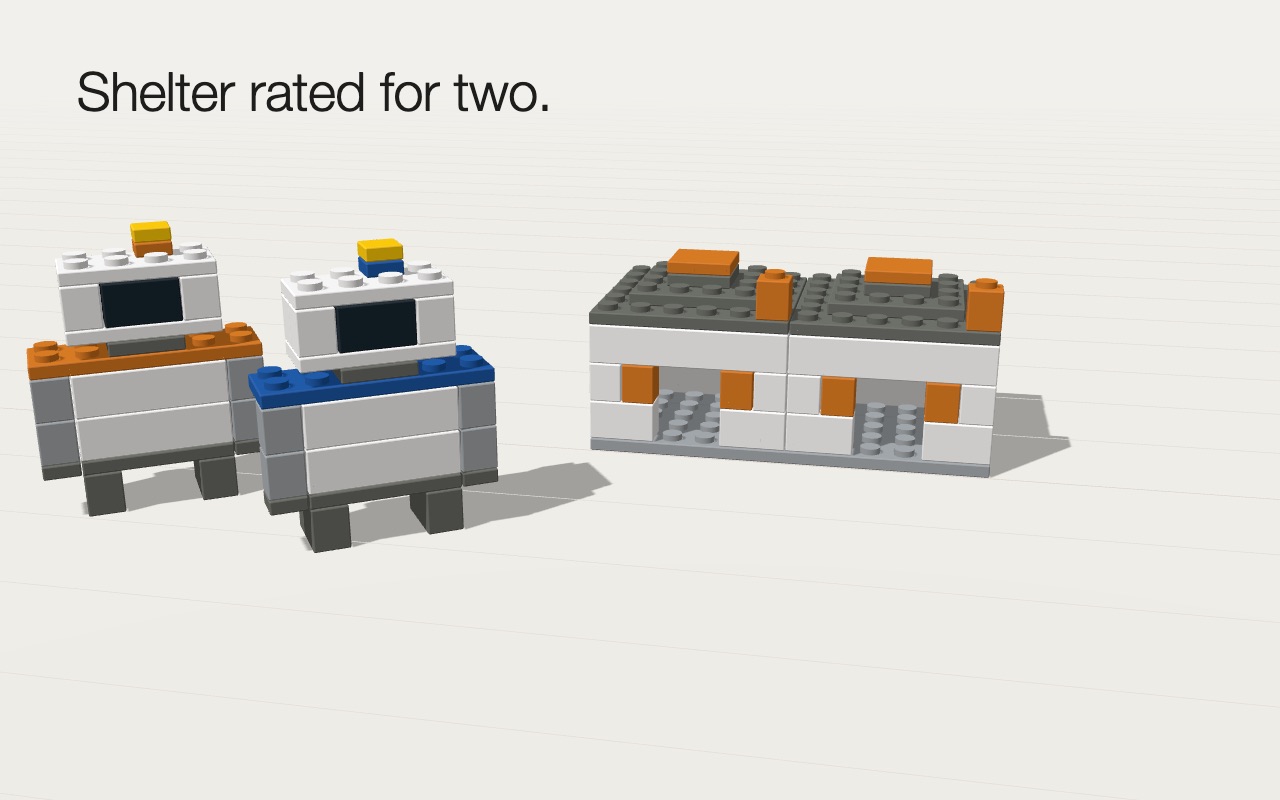
The Little Builder
A small robot assembles itself, builds a shelter rated for one, then builds a friend. Every model in the story is checked as really buildable with LEGO bricks, and each one can be downloaded as an LDraw file.
projects/brick-stage/out/
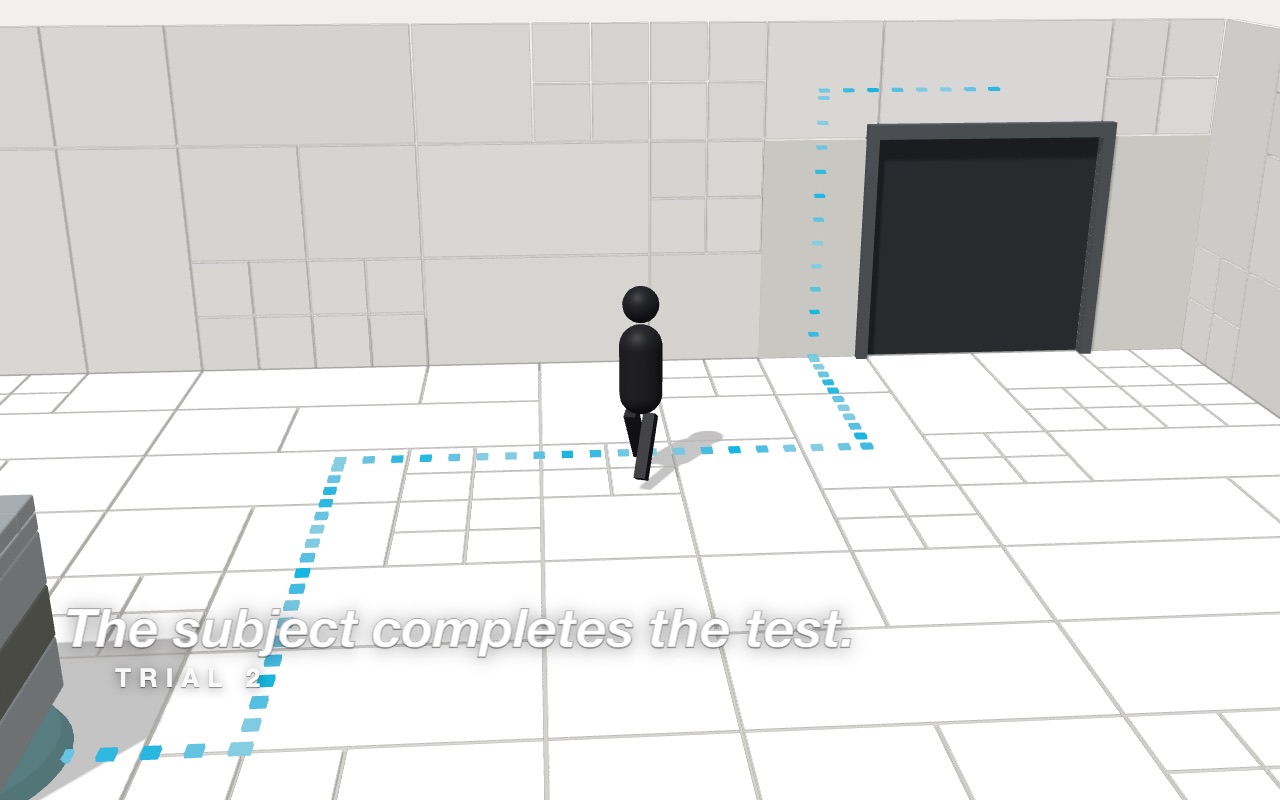
Test Chamber
An instruction video in the style of a puzzle-game tutorial: the chamber assembles itself panel by panel, a button, door and signal line are installed, and a pictogram subject solves the test with a cube built from real bricks.
projects/brick-stage/out/
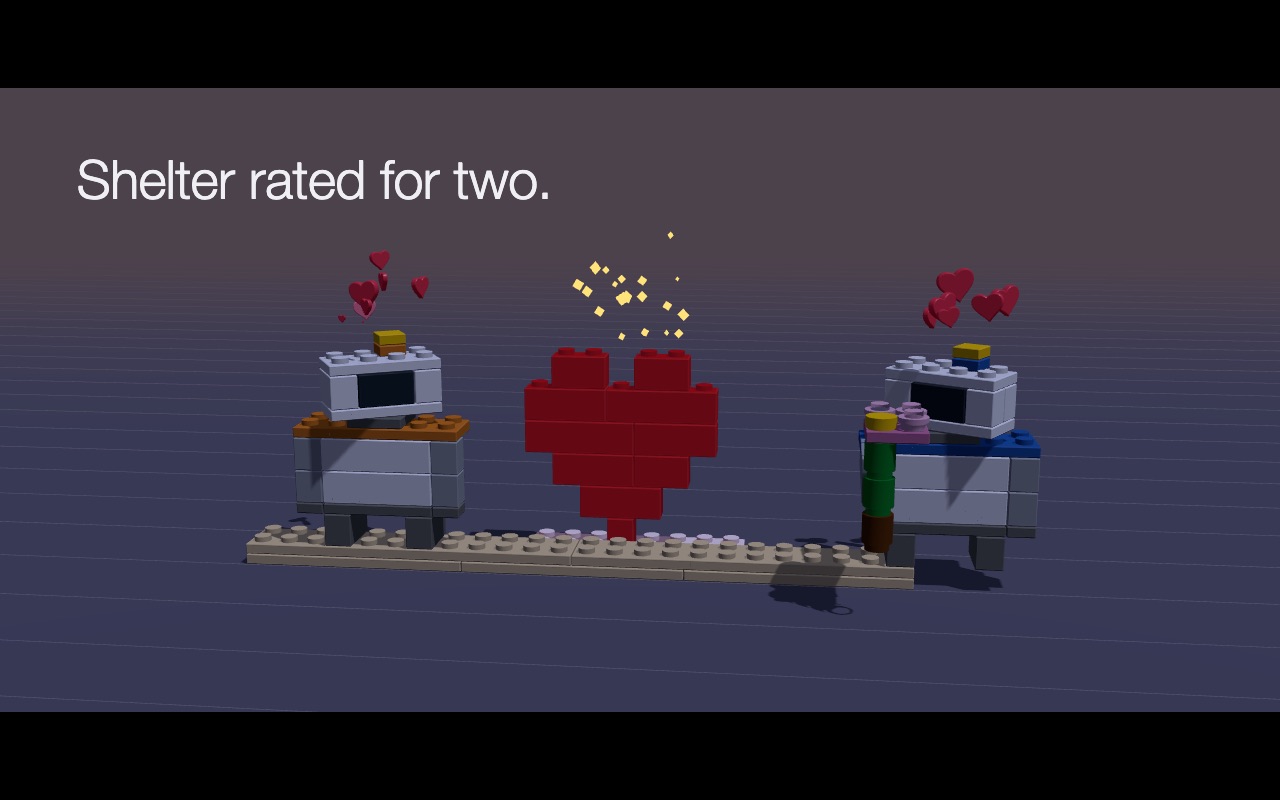
Rated for Two
The robots from The Little Builder, at sunset. One builds a flower and offers it; a brick heart assembles as night falls. Speech bubbles, joints, particles and a generated chord pad — and every model still checked as really buildable.
projects/brick-stage/out/
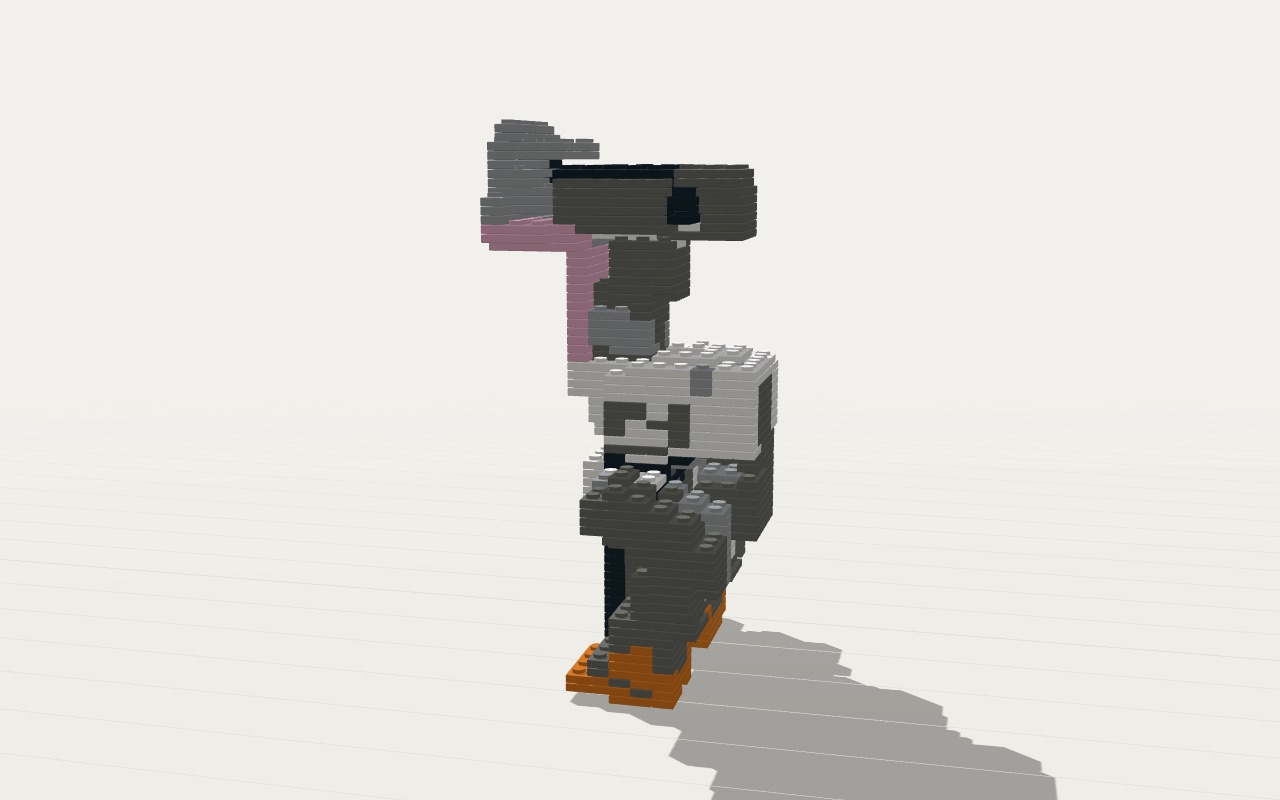
Microduck, in Bricks
Pollen Robotics' open-source Microduck robot, sampled from its own CAD into 670 LEGO plates and built the way an instruction booklet builds it: in sections, every plate arriving along the path it really goes in, the head made on its own and set on the neck. Prompted by the Microduck LEGO booklet on Hugging Face.
projects/brick-stage/out/
Systems in Miniature 7
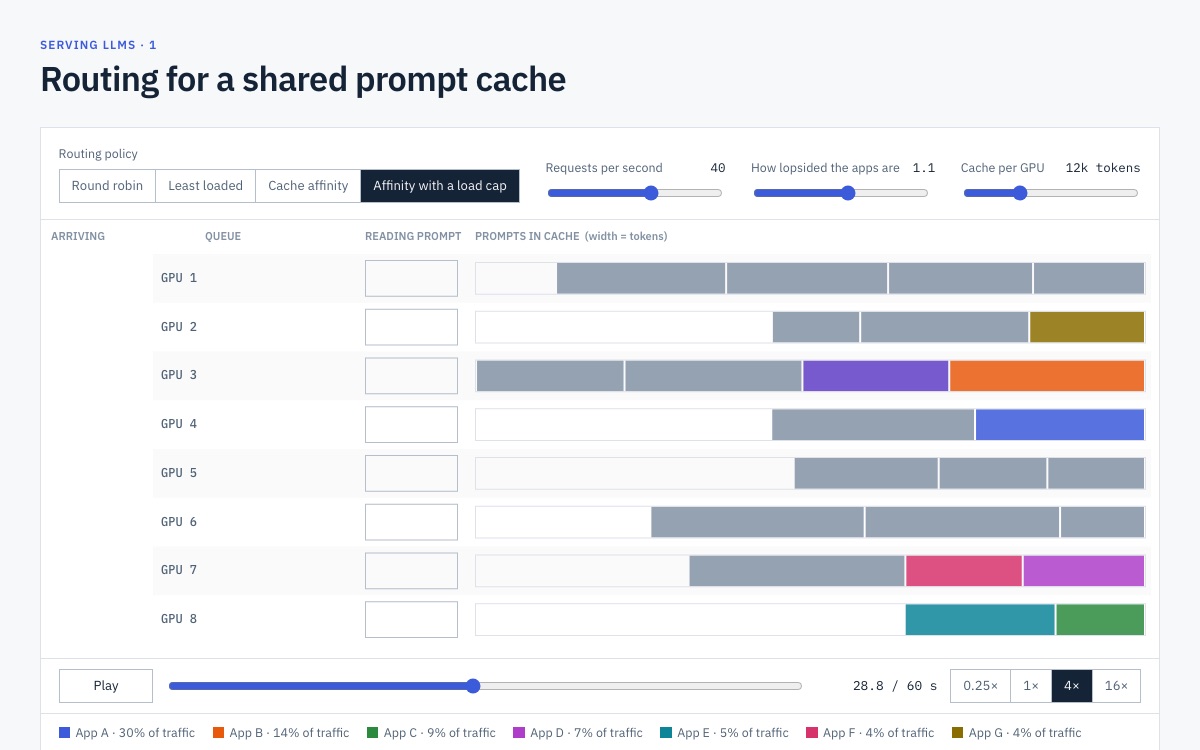
Routing for a Shared Prompt Cache
Eight GPUs serve chat requests that share long prompts. Round robin keeps re-reading the same prompts; sending each prompt to the GPU that already has it cuts the wait for the first token from about half a second to 30 ms, until the most popular app overloads one GPU and a load cap spreads it.
systems/miniatures/
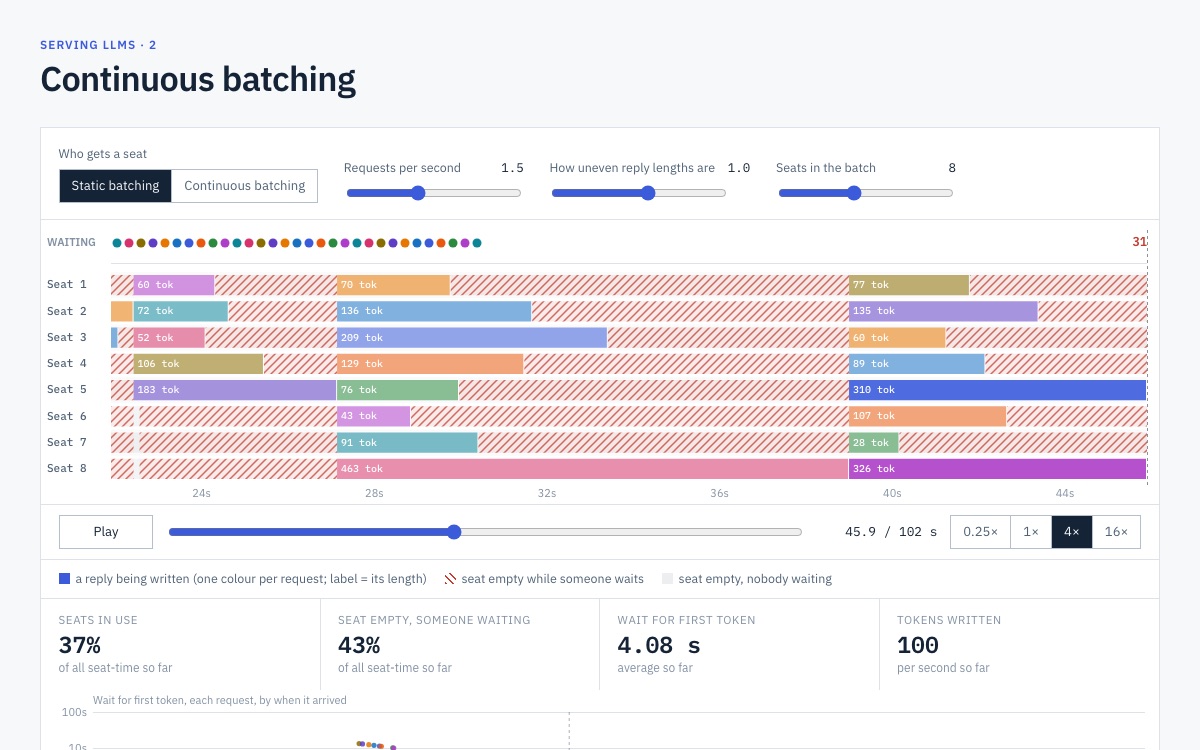
Continuous Batching
One GPU writing many replies at once. Waiting for the slowest reply in each batch leaves seats empty half the time someone is queuing; swapping finished replies out at every step cuts the wait for the first word from 16 s to under half a second.
systems/miniatures/
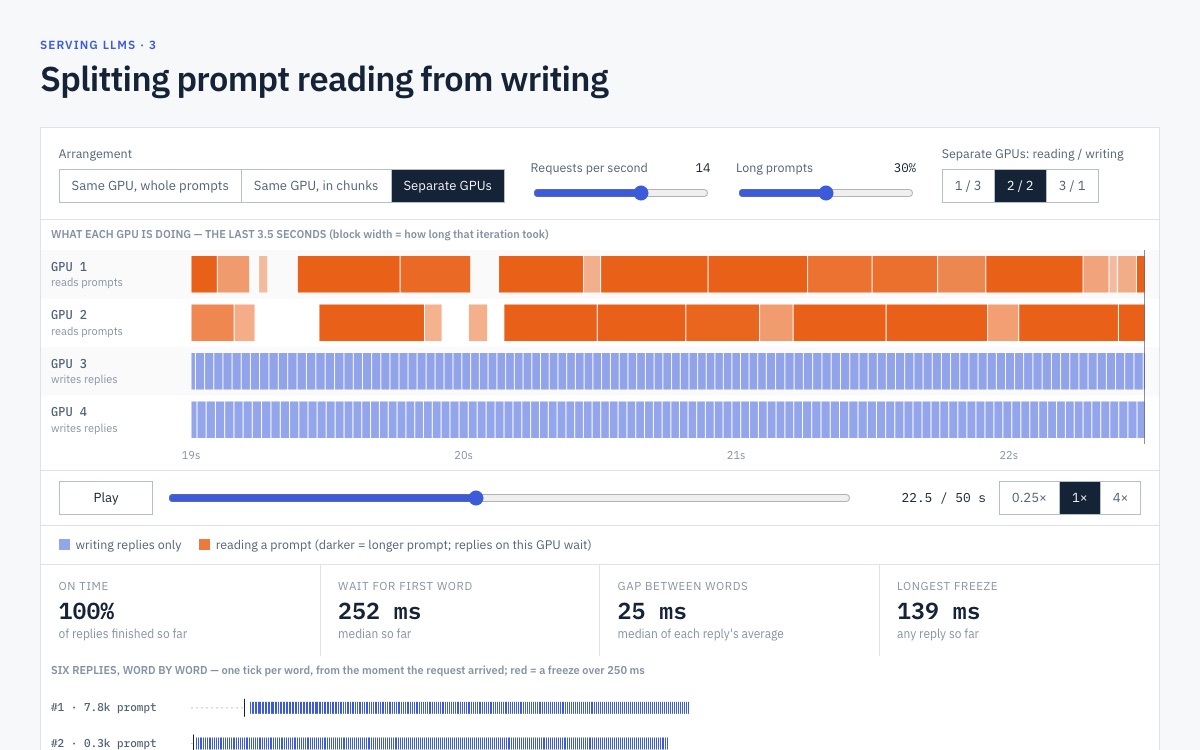
Splitting Prompt Reading from Writing
Reading a long prompt freezes every other reply on the same GPU. The average gap between words looks fine while only 1% of replies stay on time; giving reading and writing their own GPUs brings that to 100%, but only if the split fits the traffic.
systems/miniatures/
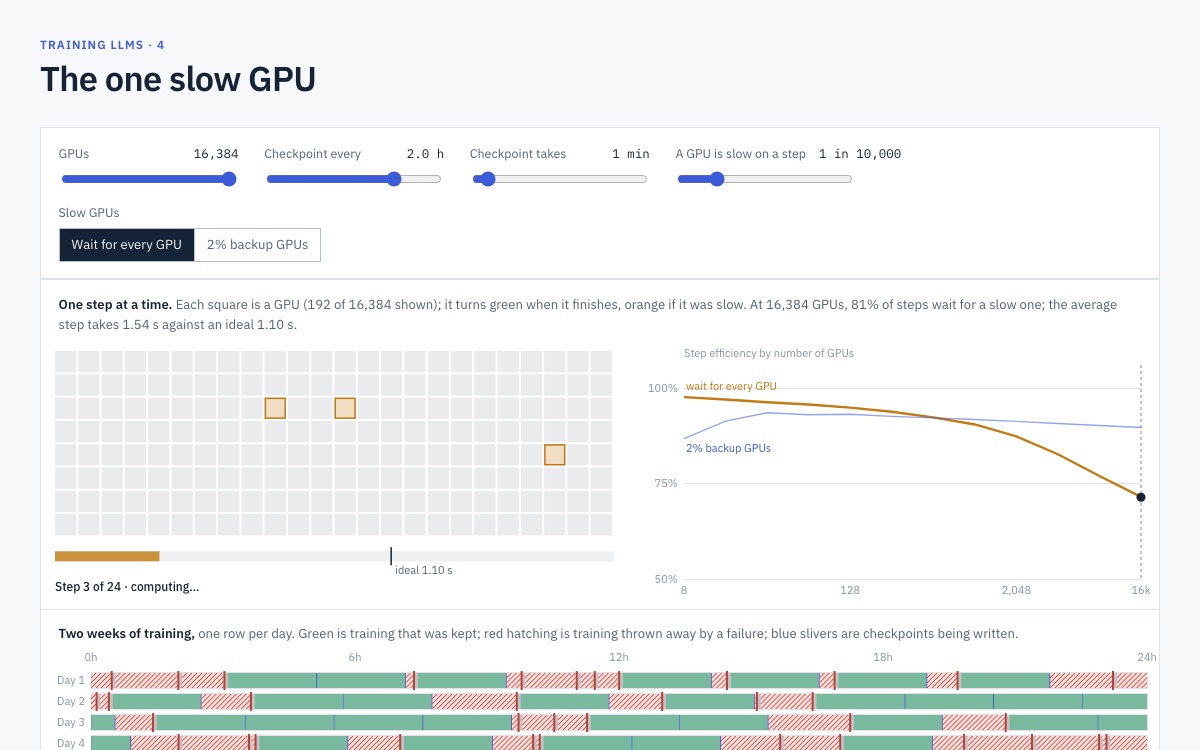
The One Slow GPU
Sixteen thousand GPUs train in lockstep, so every step waits for the slowest, and something fails every three hours. Two weeks of training, with the work each failure throws away, and how often to save it.
systems/miniatures/
Explainers 9
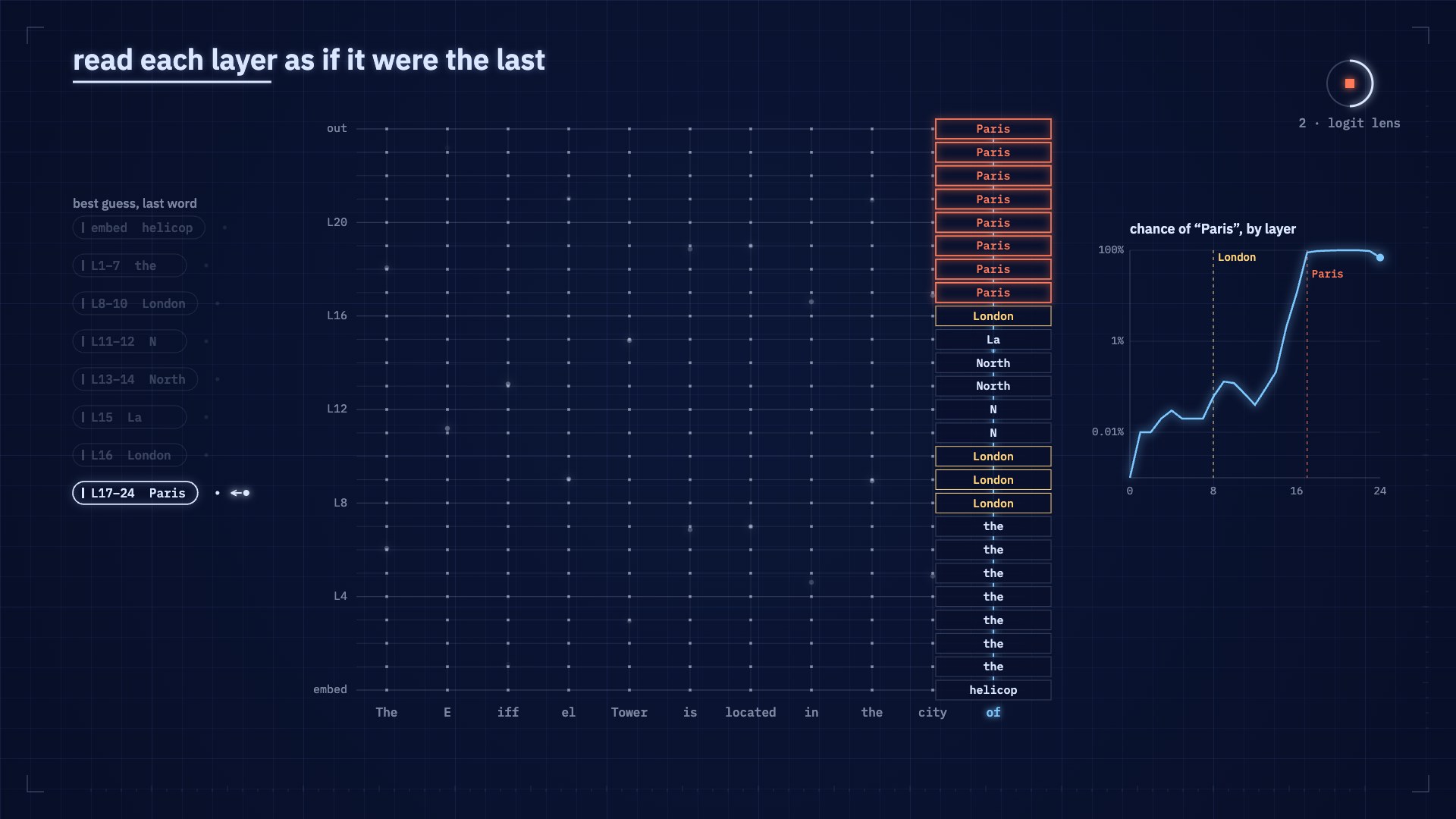
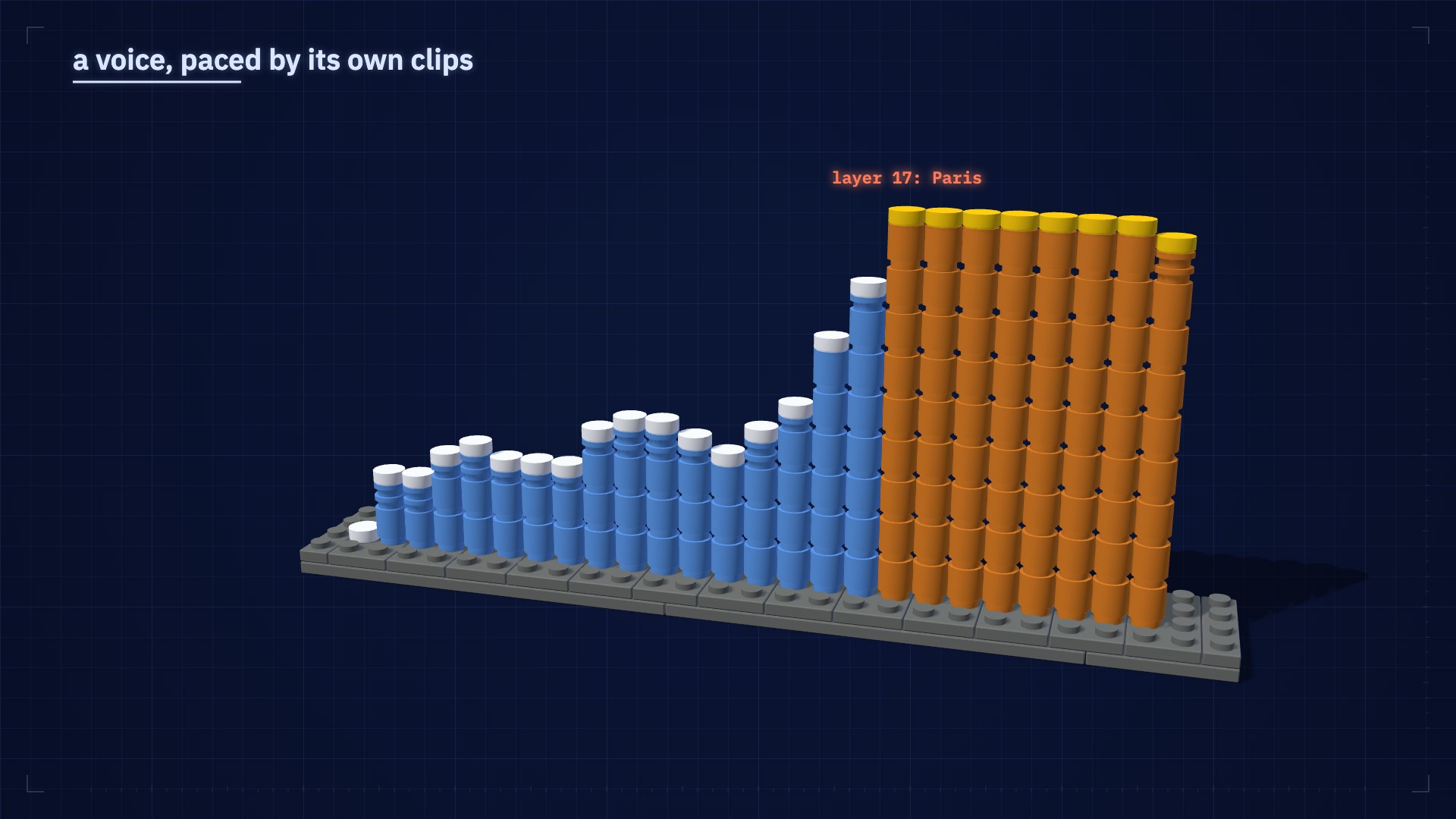
Where GPT-2 Keeps a Fact
A blueprint explainer: the logit lens reads every layer (the → London → Paris), then causal tracing breaks the model and repairs it one piece at a time to find the fact in the MLPs at “el”. Every number from Model Microscope.
projects/brick-stage/out/
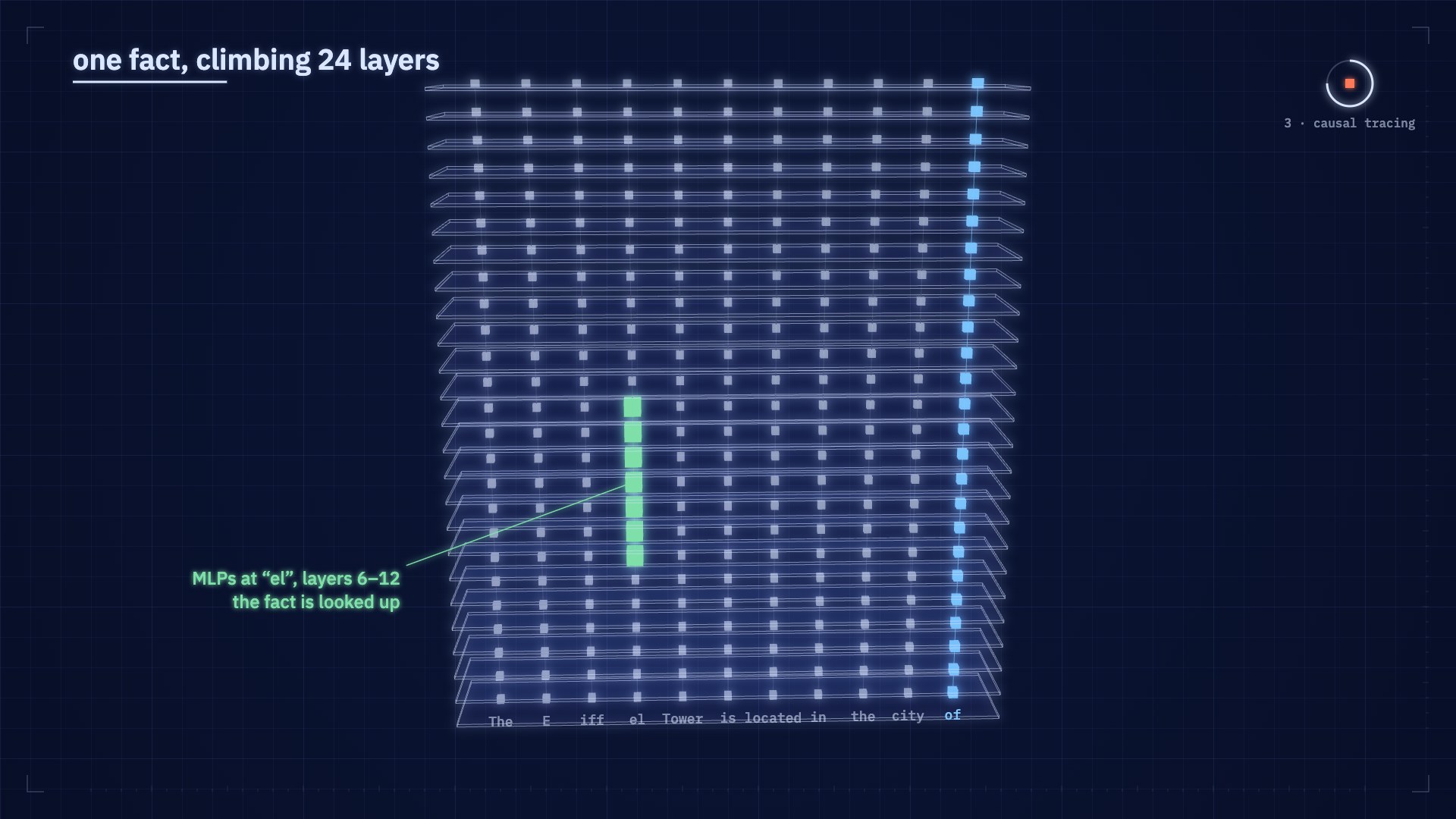
One Fact, Climbing 24 Layers
The same fact in 3D: GPT-2's layers as a stack of glowing plates, the camera orbiting, labels pinned to the plates, and the route of the fact drawn as a tube from the memory to the answer.
projects/brick-stage/out/
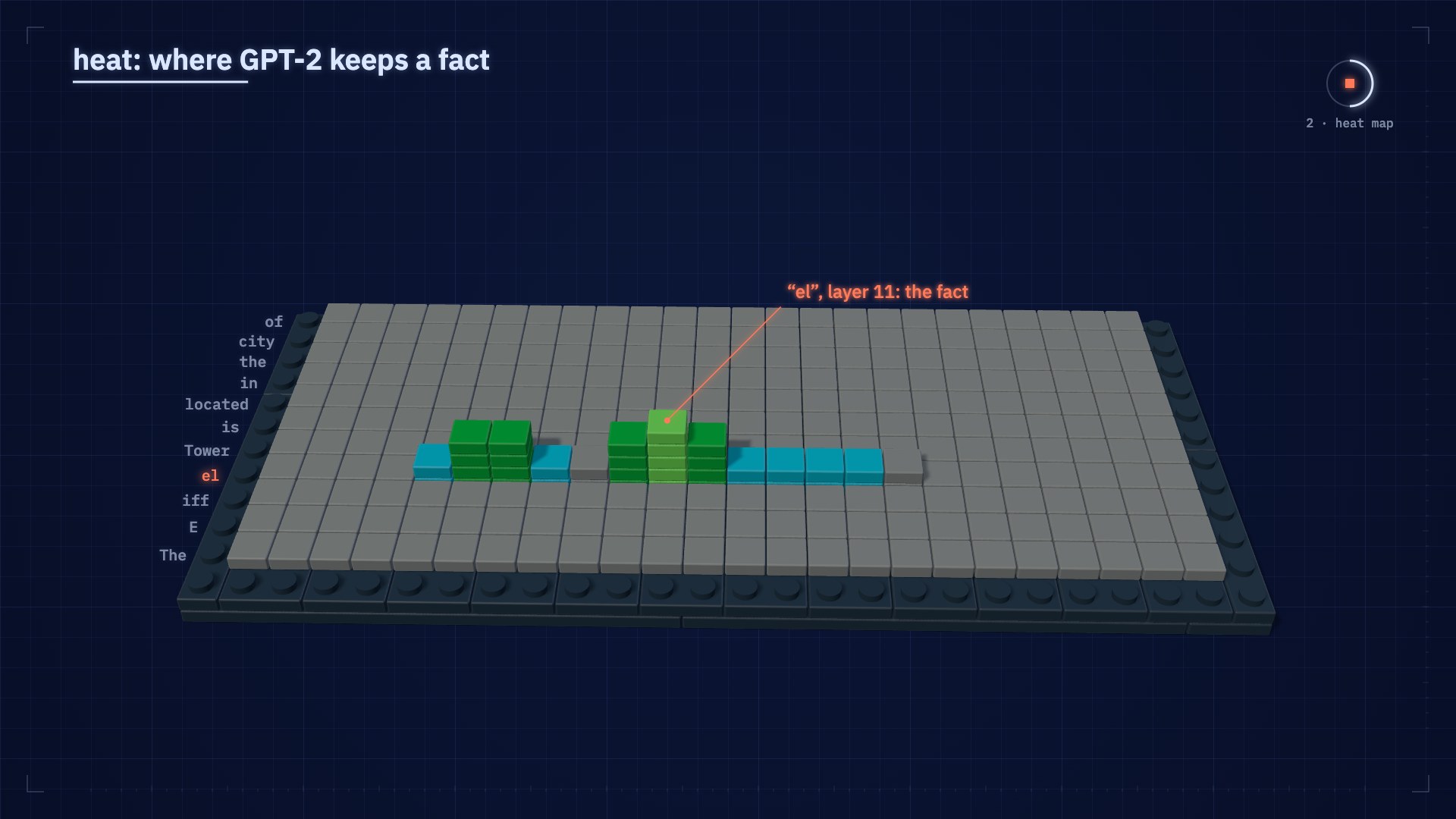
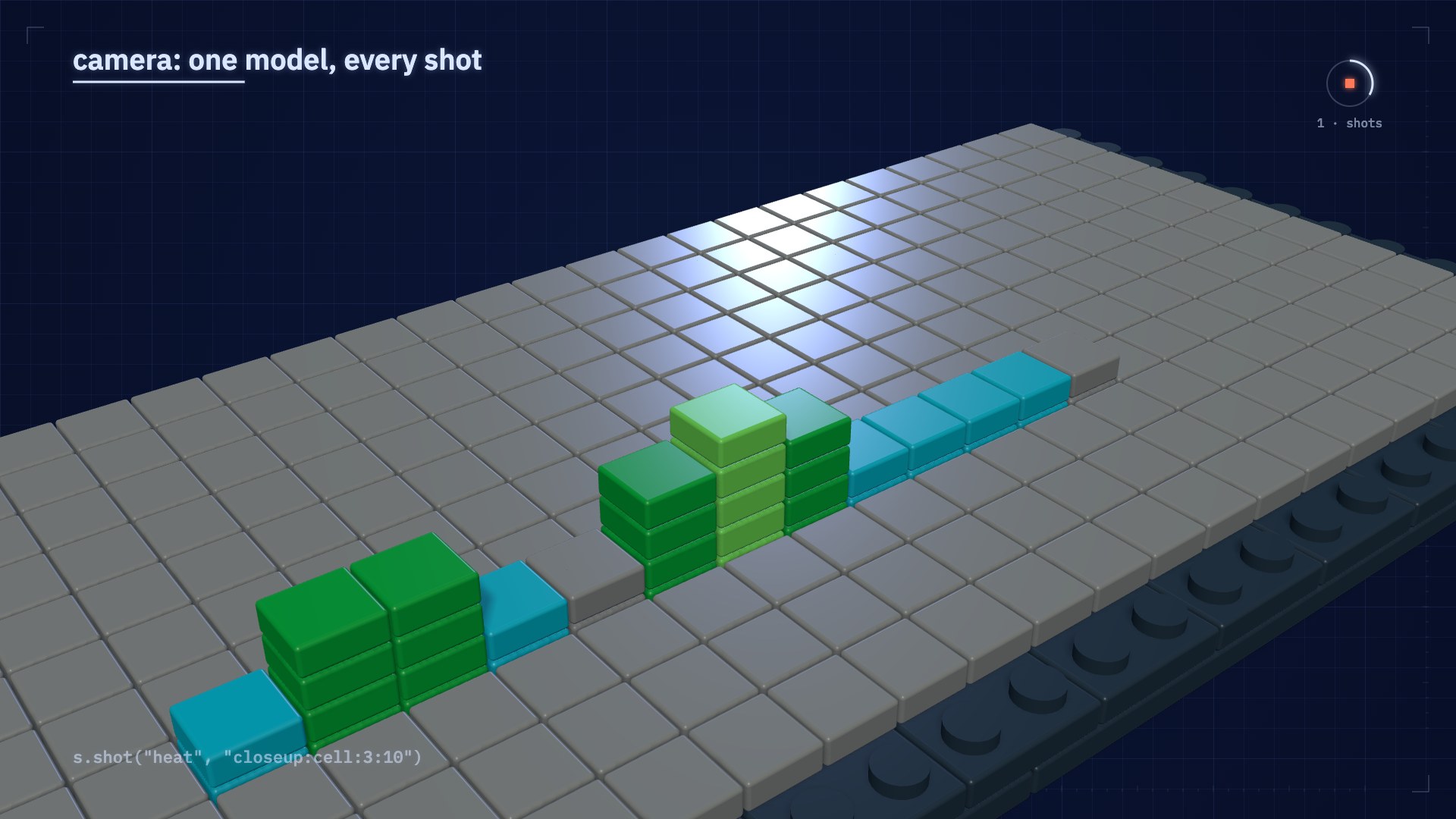
Explaining with Bricks
Charts built from real LEGO parts that assemble on camera — bars, a heat map, lollipop columns and a block diagram — each a checked, buildable model, with the blueprint layer pinned on top.
projects/brick-stage/out/
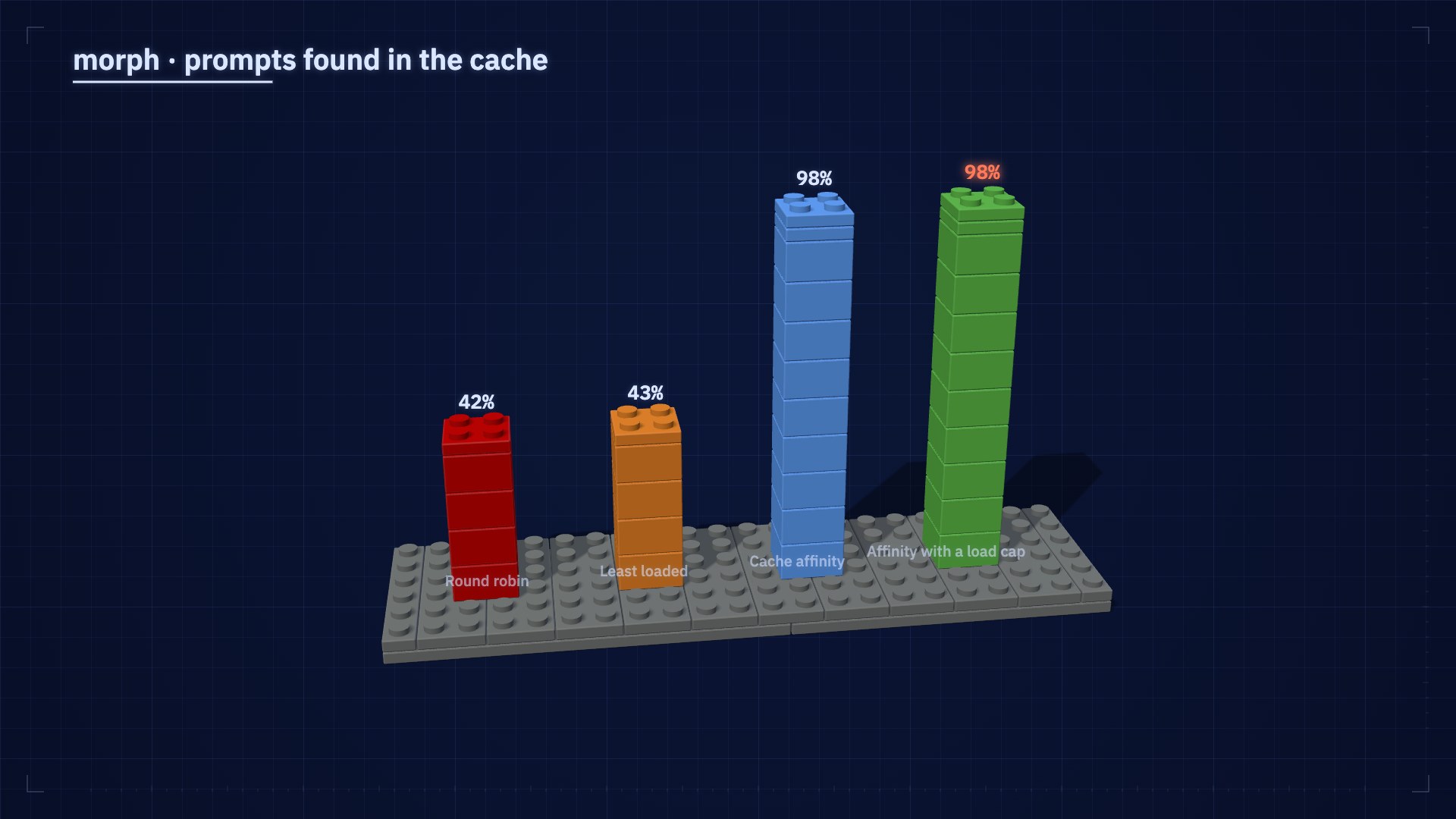
Morph: Charts That Rebuild Themselves
One brick chart flies apart and rebuilds as the next: matching bricks arc to their new places, the rest change shape in flight. Real cache-router data.
projects/brick-stage/out/
Archive 1
The Shelf
A ledger of what I grew up with, kept for my kids: games, films, television, music, books, YouTube channels and the early internet — 167 entries, from PTV dramas and Ufone ads to Need for Speed and Columbo. Boots like a console, browses like a shelf, and records why each thing mattered rather than holding the files. Every entry is marked preserved, at risk, or gone, and one with no surviving copy shows up as a gap on the shelf rather than a book on it.
hosted at rubix982.github.io
Kept in data/built.yml. A local file is copied into the site on build; an entry with a url is embedded from wherever it is deployed.